PROBLEM SPACE
Being the worlds largest and busiest international airport, Heathrow have reached full capacity and wanted to re-think their vision towards travel.
Arming Heathrow with a new proposition our aim would be re-think a travelers experience, taking the airport from its historical role of being a facilitator to being at the heart of travels
MY ROLE
I worked as part of the discovery team and led the UX design for several streams within the programme of work from search, services and parking transformation. working with the businesses key stakeholders.
Working in tangent with Visual Designers, Content Strategists and Business Consultants to aid in big thinking, understand requirements up to creating production ready designs.
The Process
Reviewing the Landscape
A key to understand what we can do best, it was important to know what Heathrows competitors were up-to.


WHAT THE BUSINESS THINKS…
STAKEHOLDER INTERVIEWS
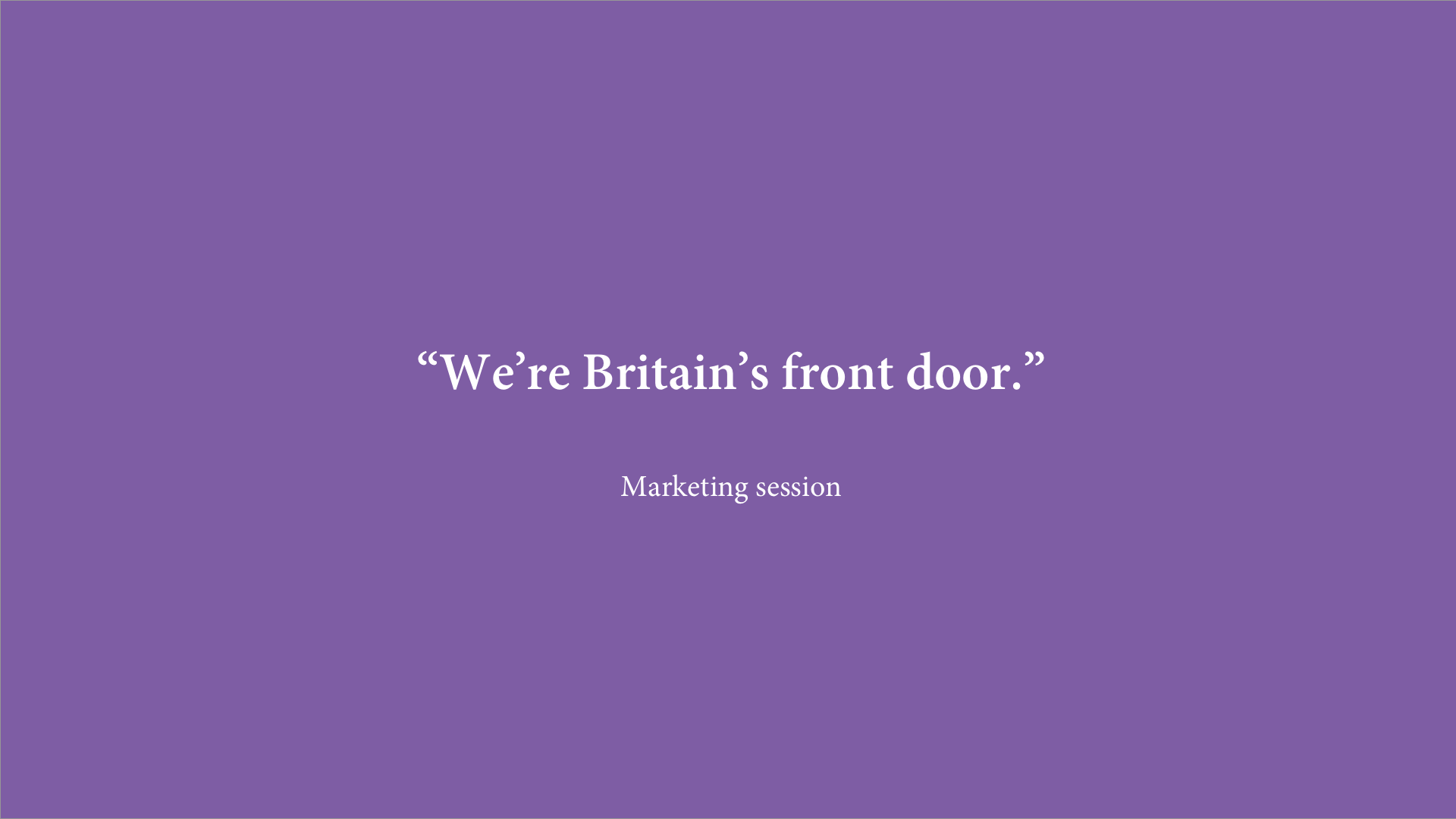
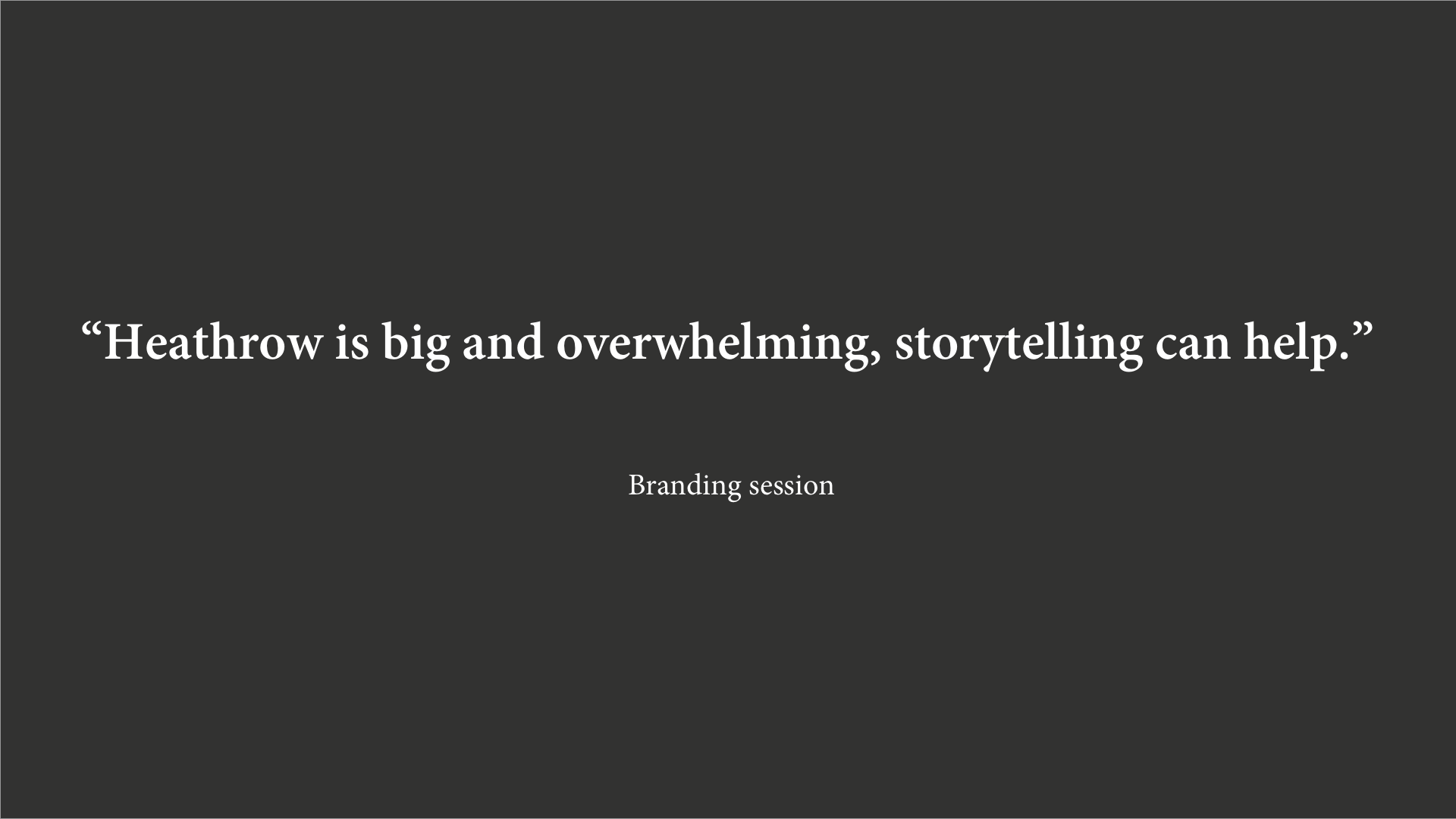
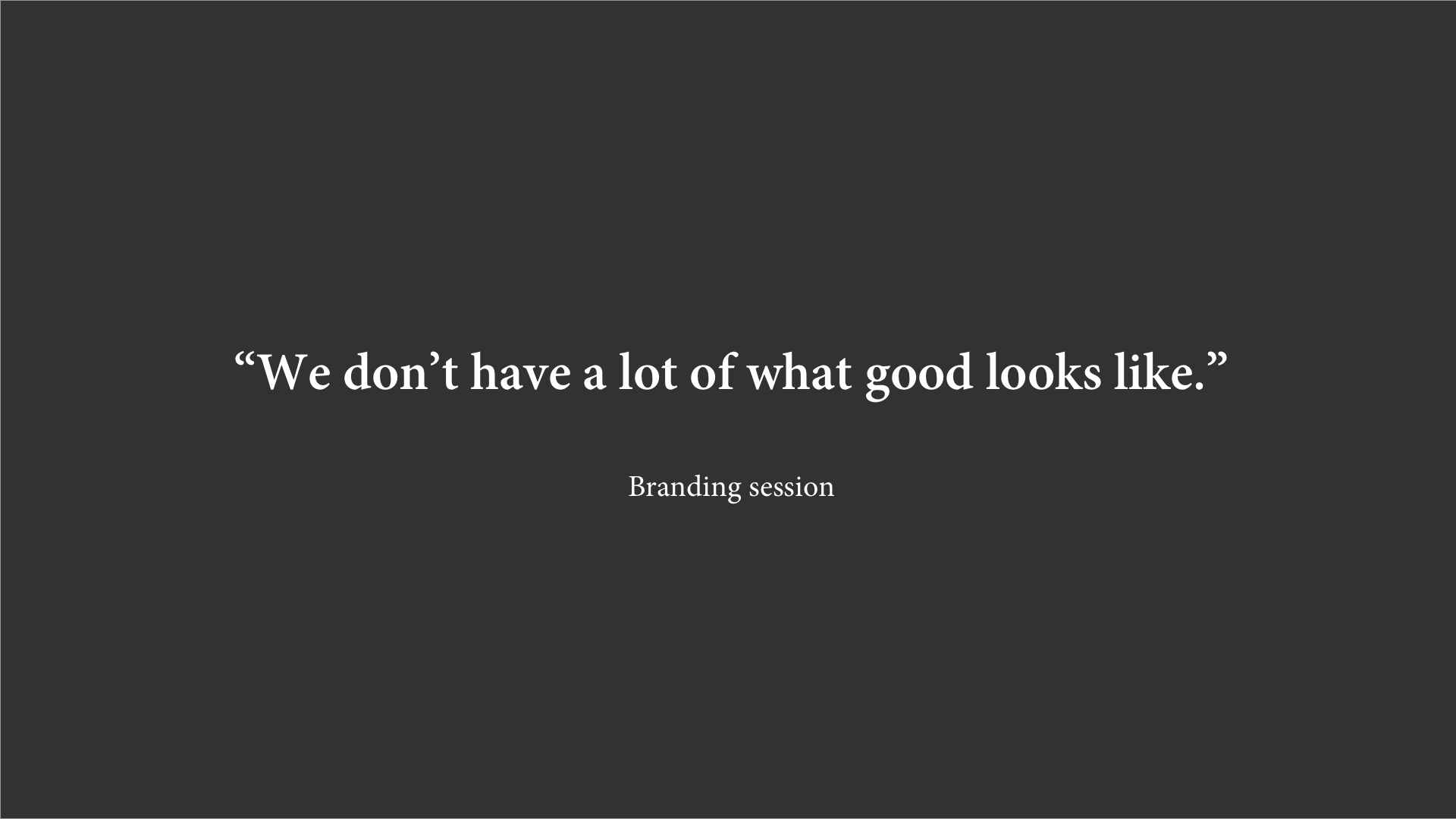
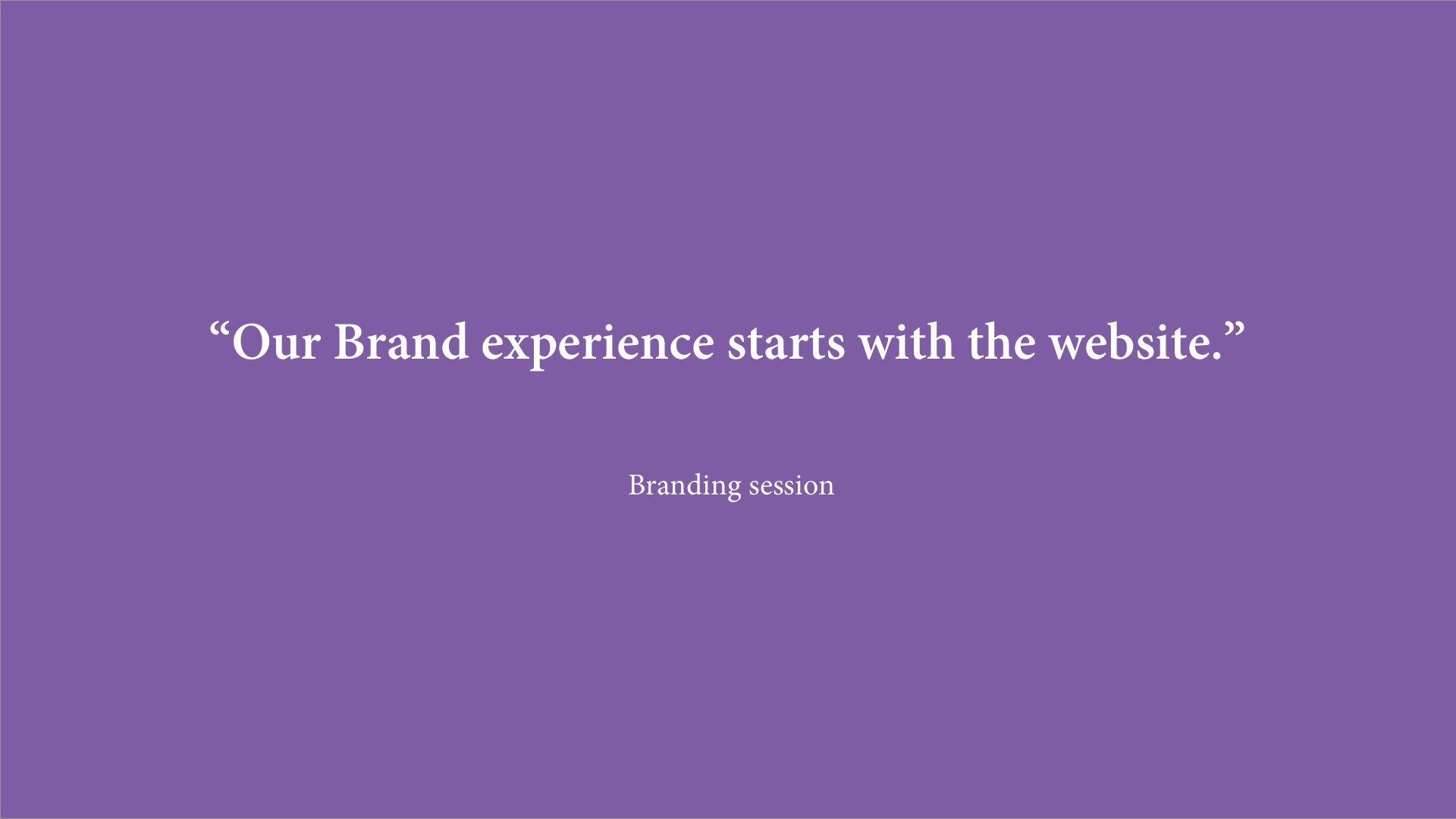
Being such a diverse business Heathrow had 7 Stakeholders from various parts of the business from E-commerce, Careers and Branding.
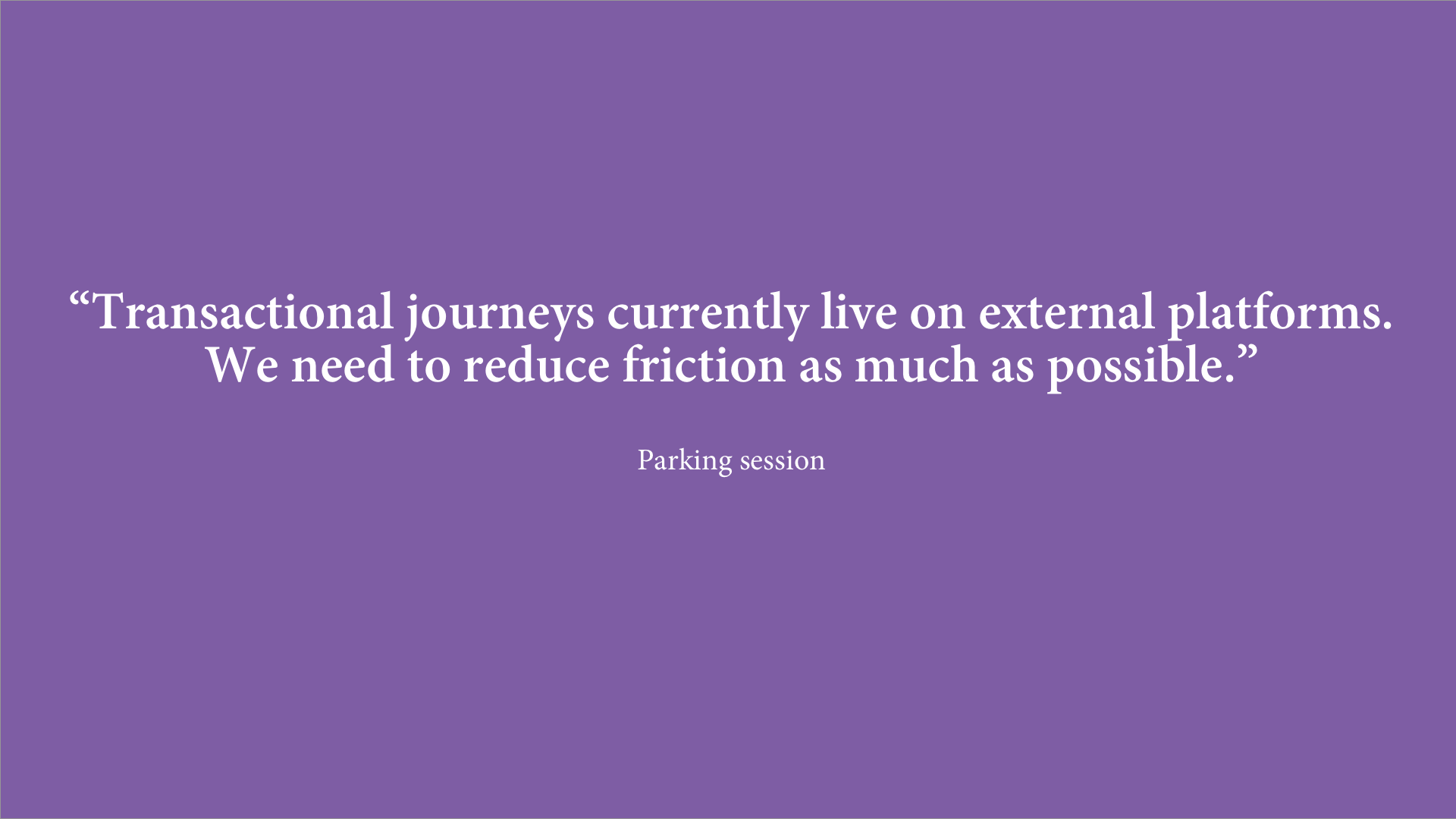
This gave us the opportunity to understand the pain-points of the current dot com experience, the story that various business areas felt a holistic Heathrow needed to tell and how such a large organisation would be using a CMS system like Adobe AEM.
User Profiles
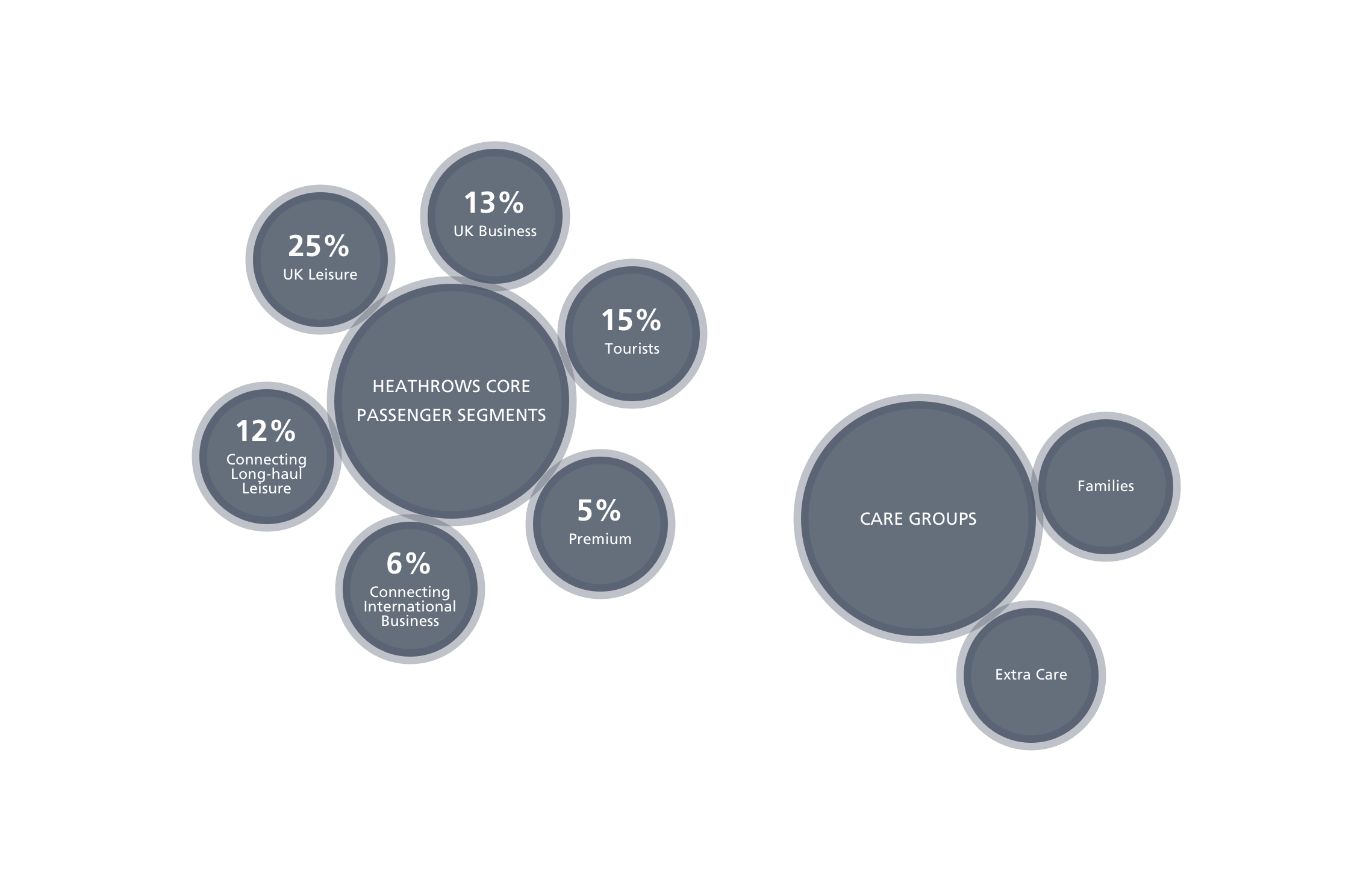
Audience segmentation
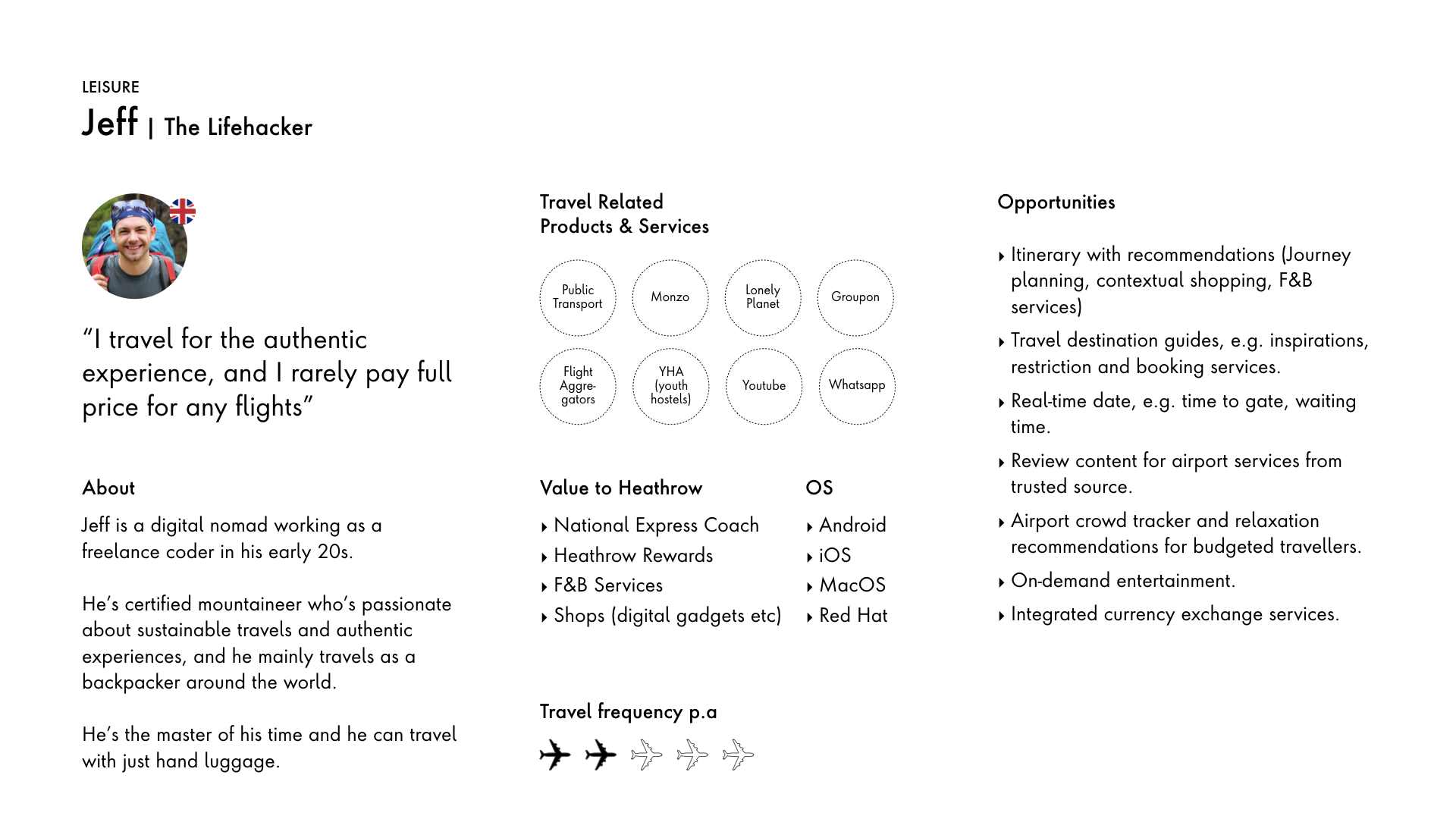
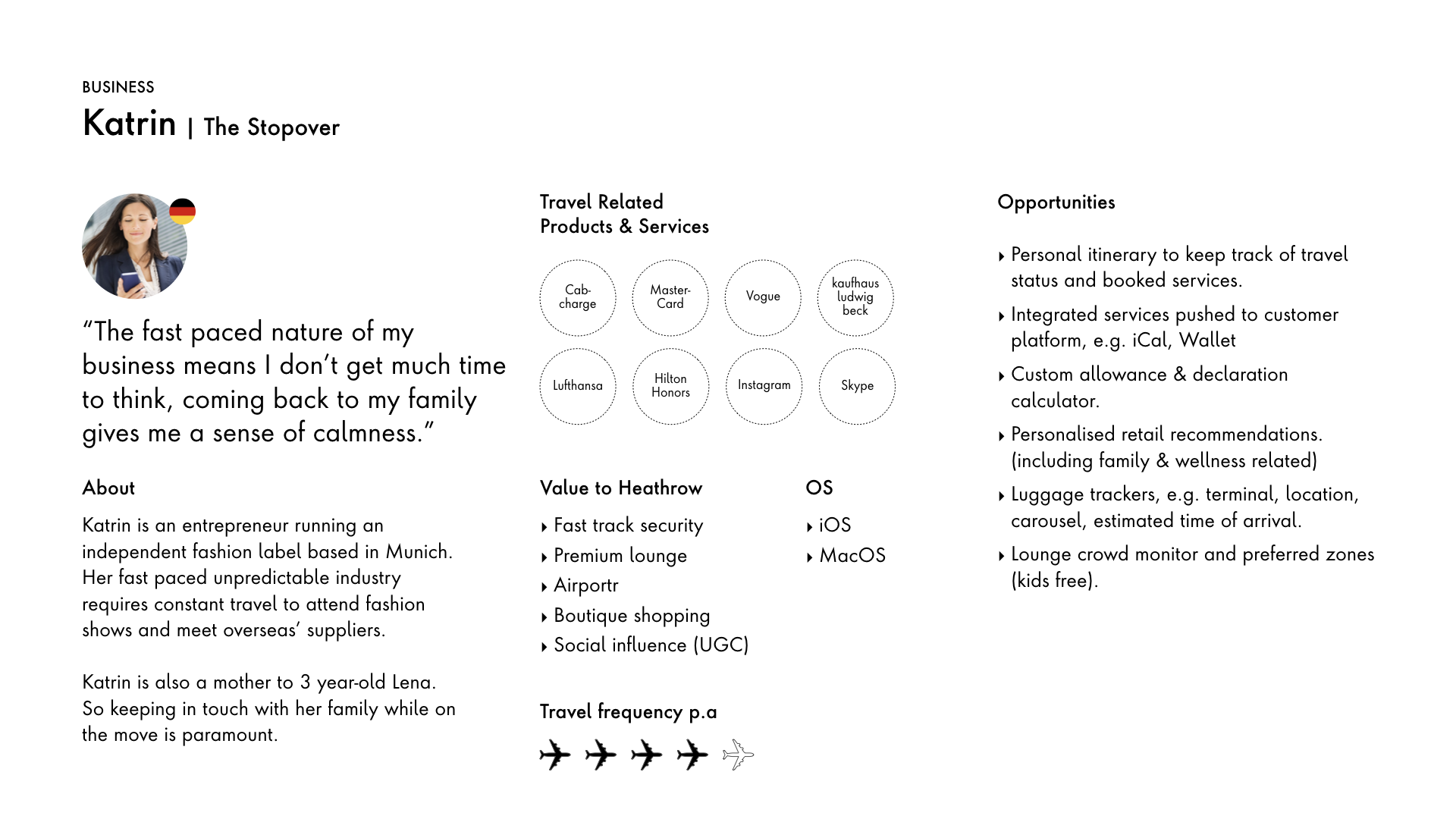
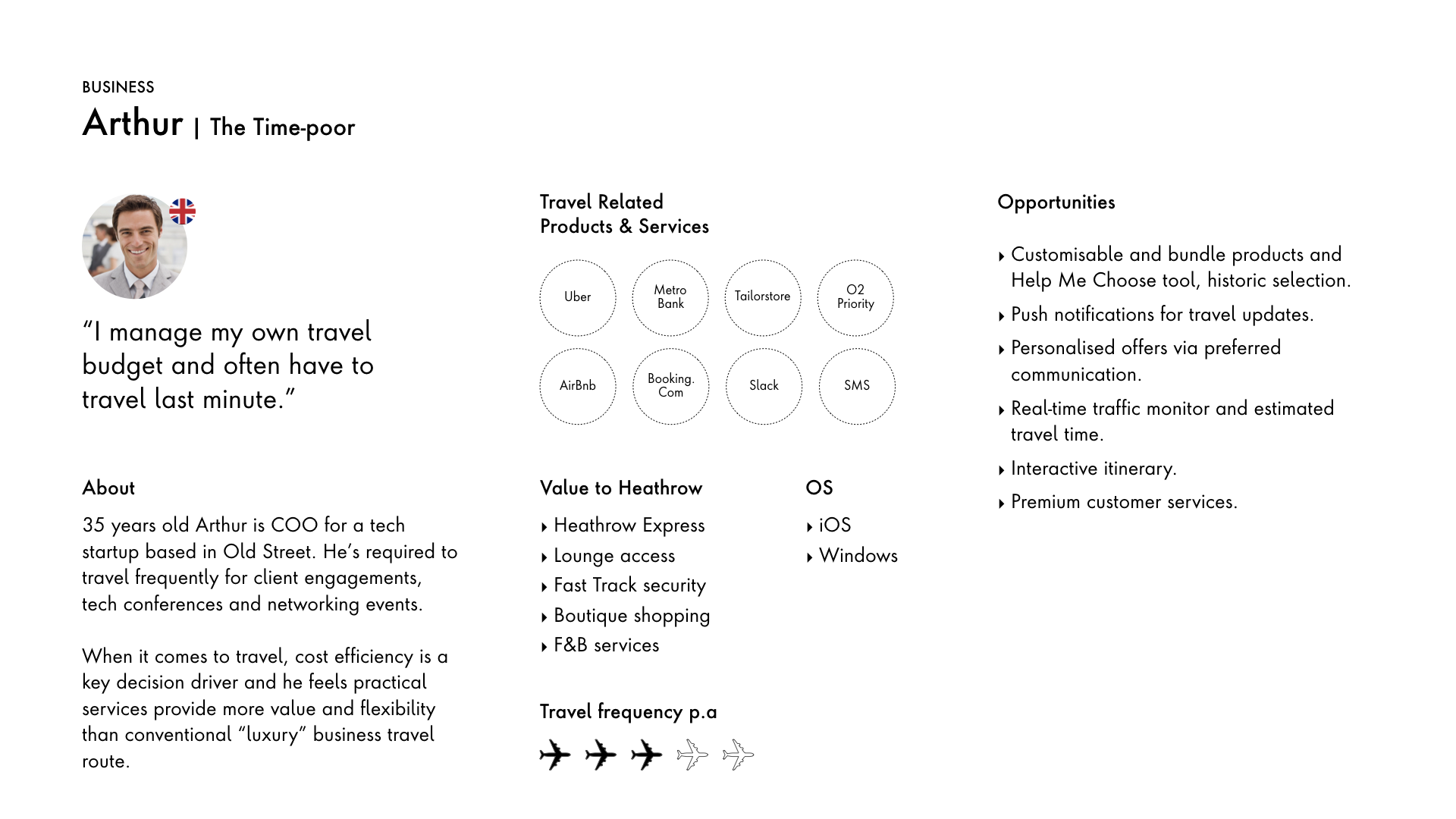
Allowed us to create an overview of our target audiences. The profiles allowed the design teams to make non-biased decision in creating our tailored experiences.
Working alongside Heathrows third party data provider we were able to understand the types of users and segment those users into tangible ____
Profiles
User Flows
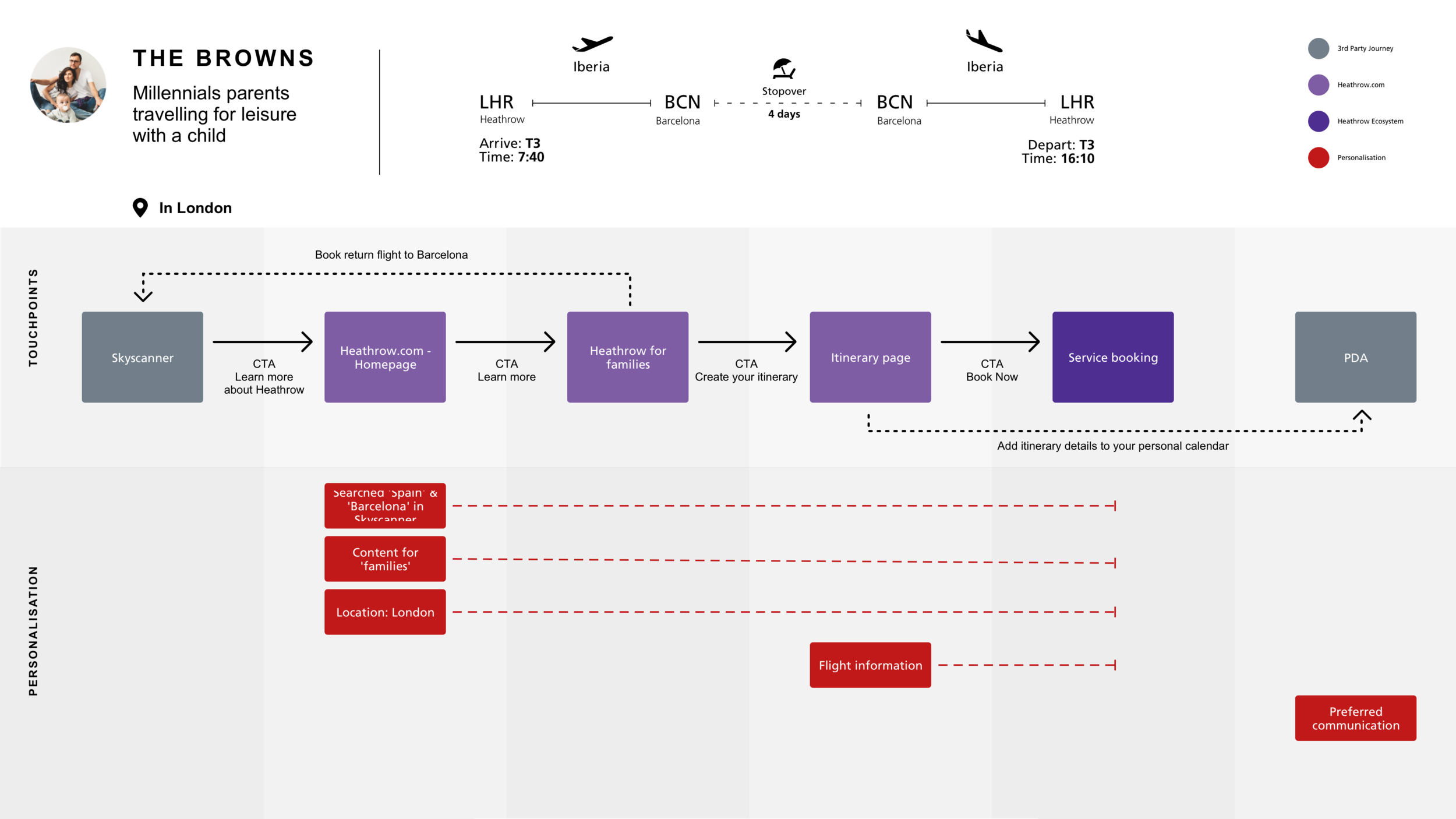
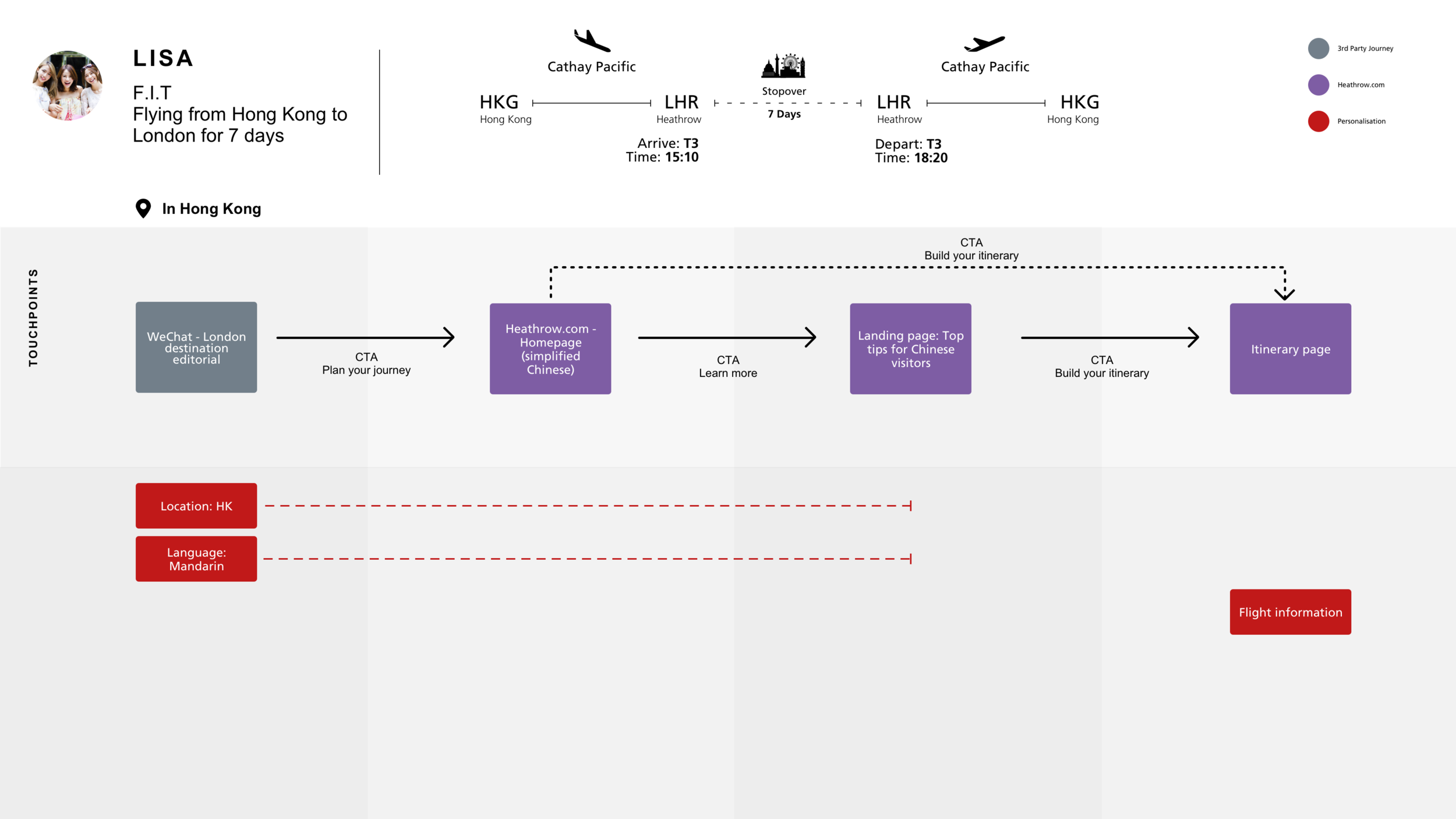
We took our user profiles and created specific flows to help us tell stories. Working along side the data team we were also able to understand the best way to utilise cookies for enhanced personalisation.

Our North Star
Experience Mapping
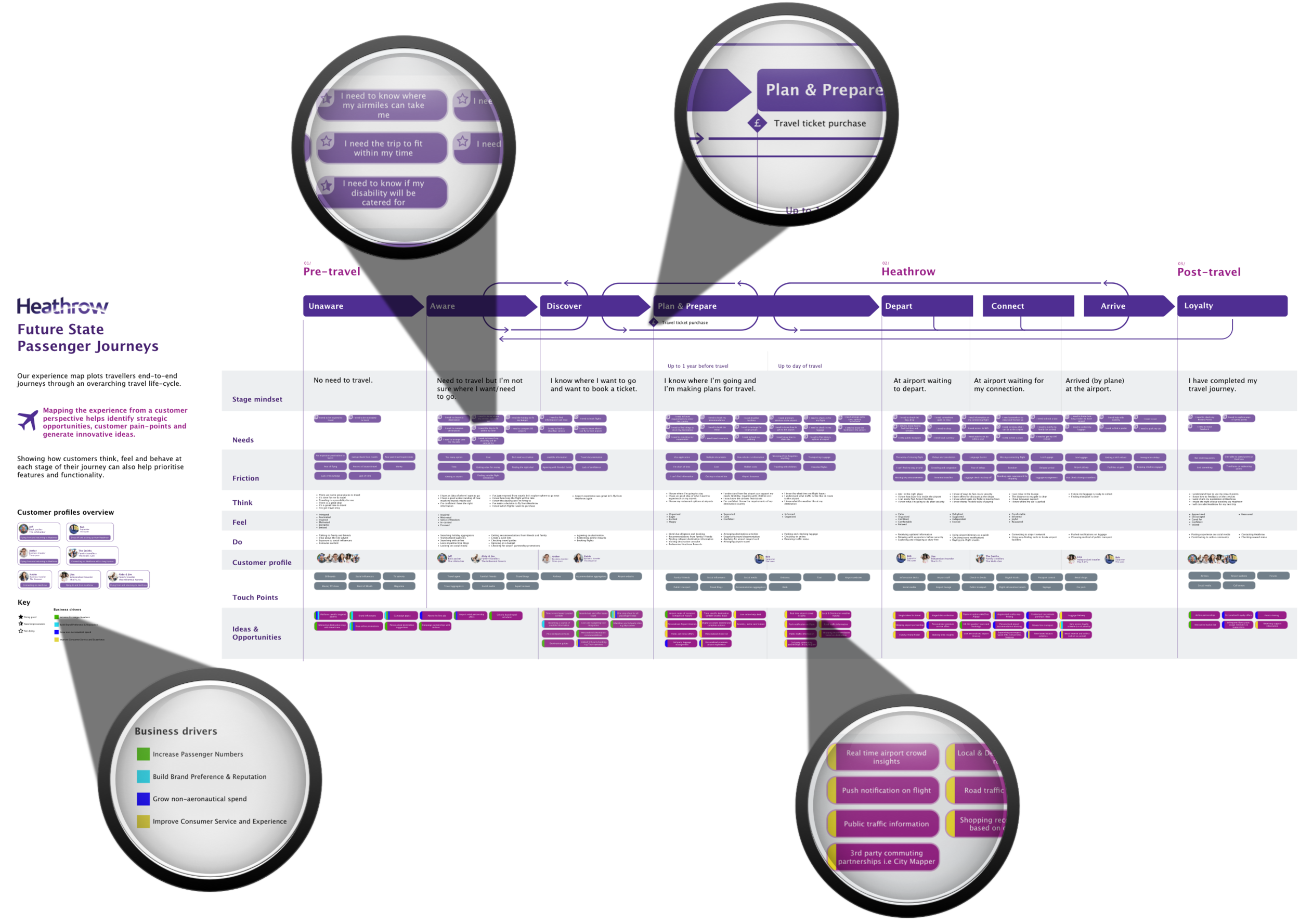
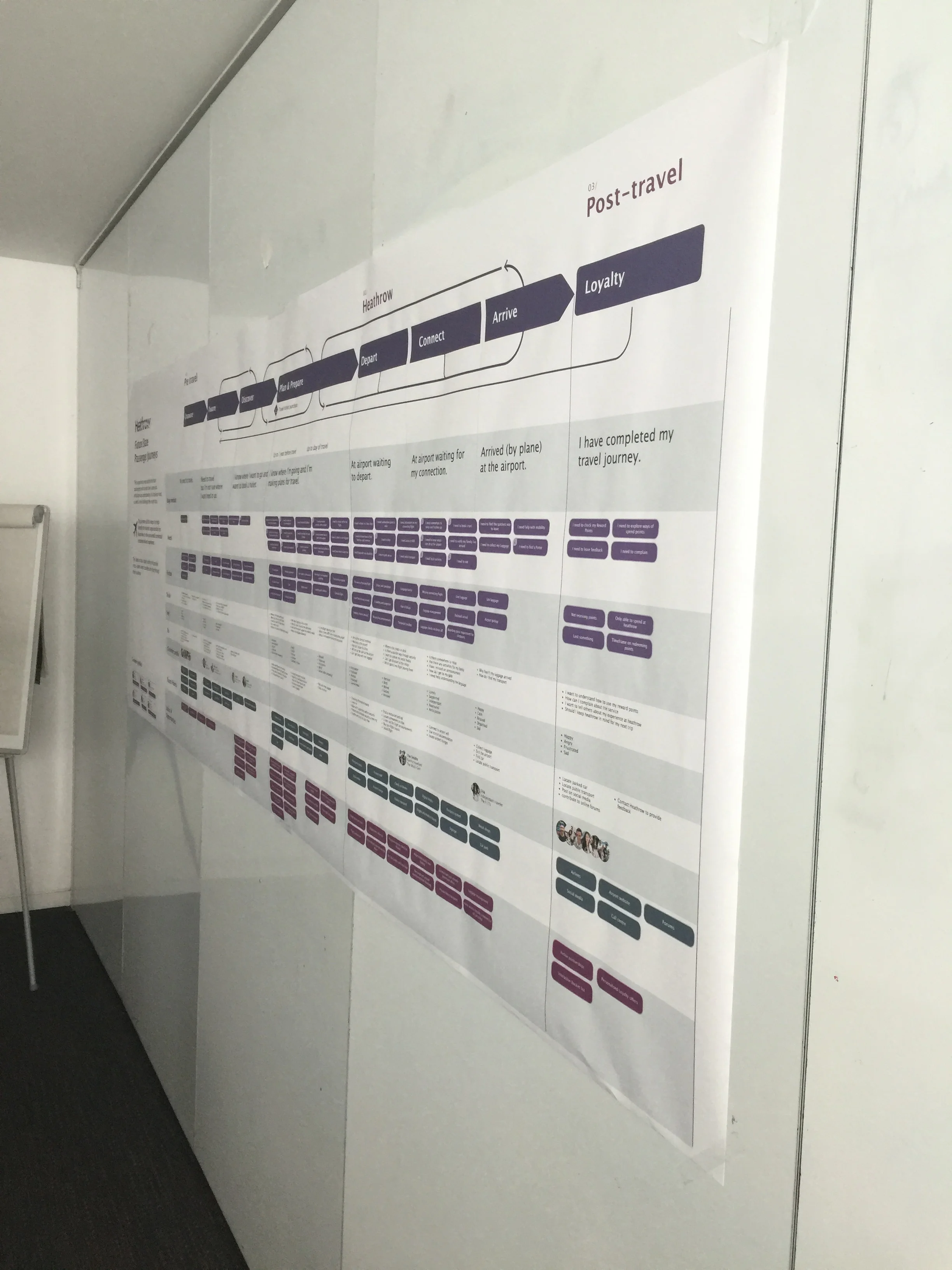
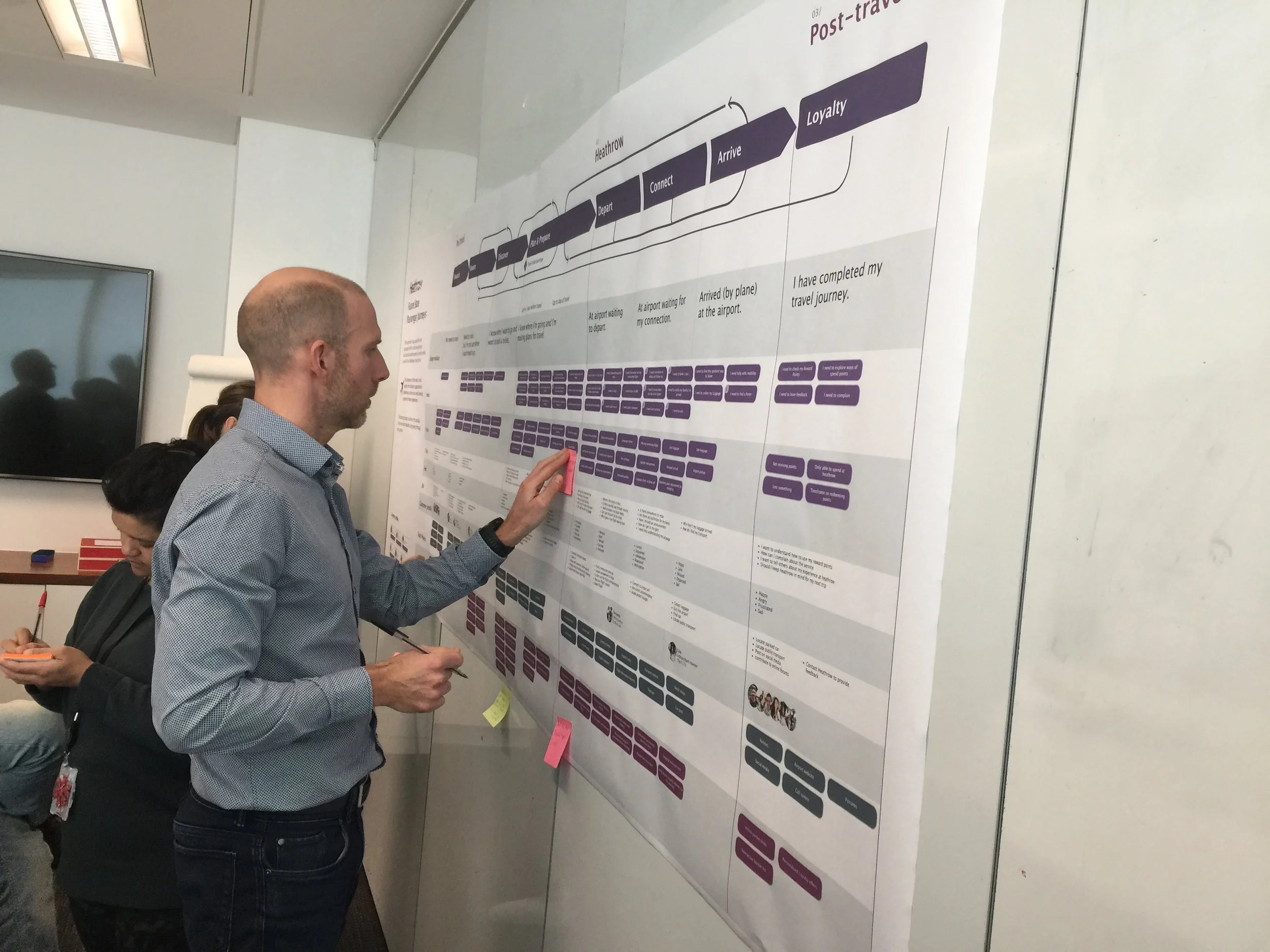
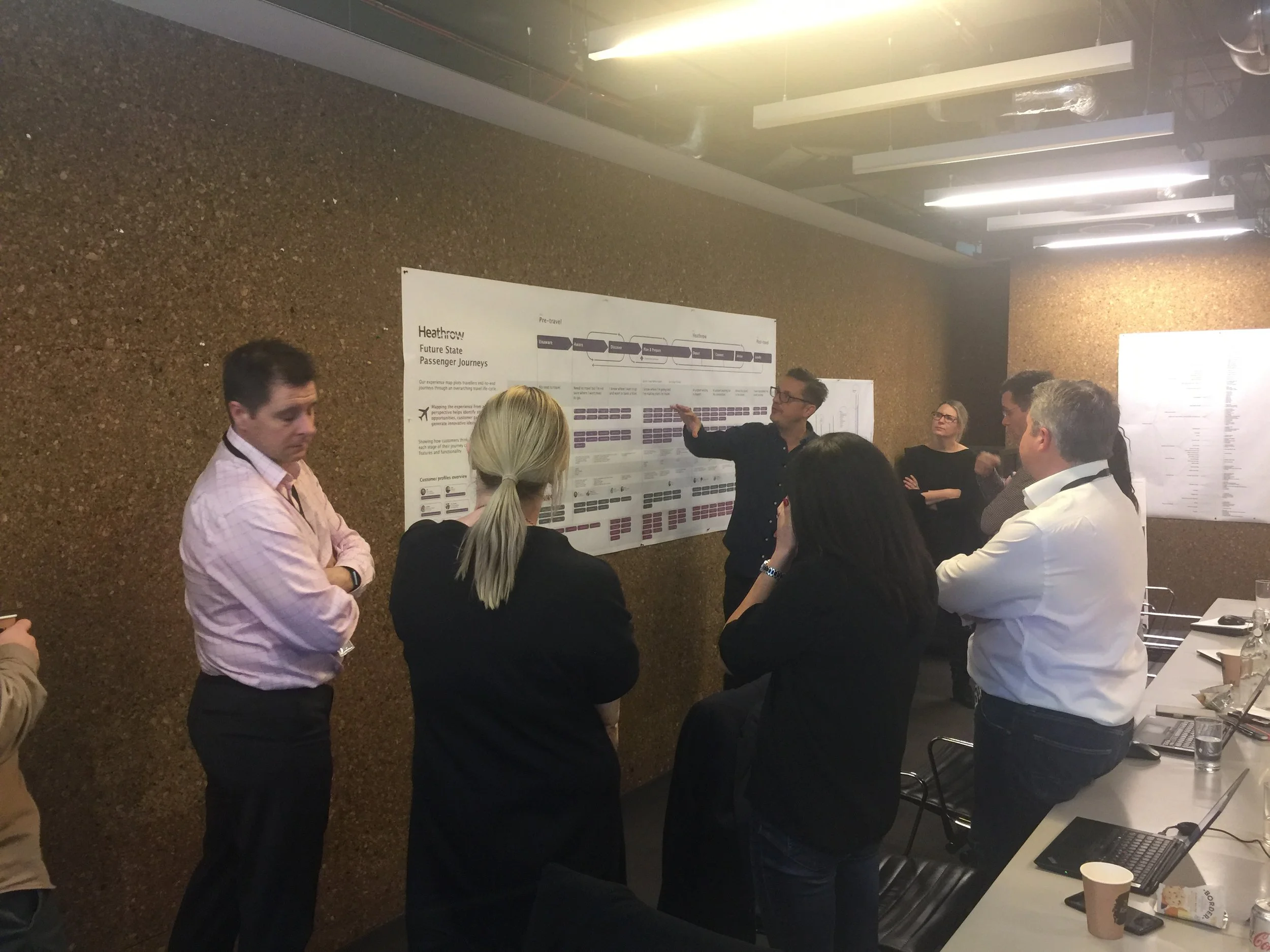
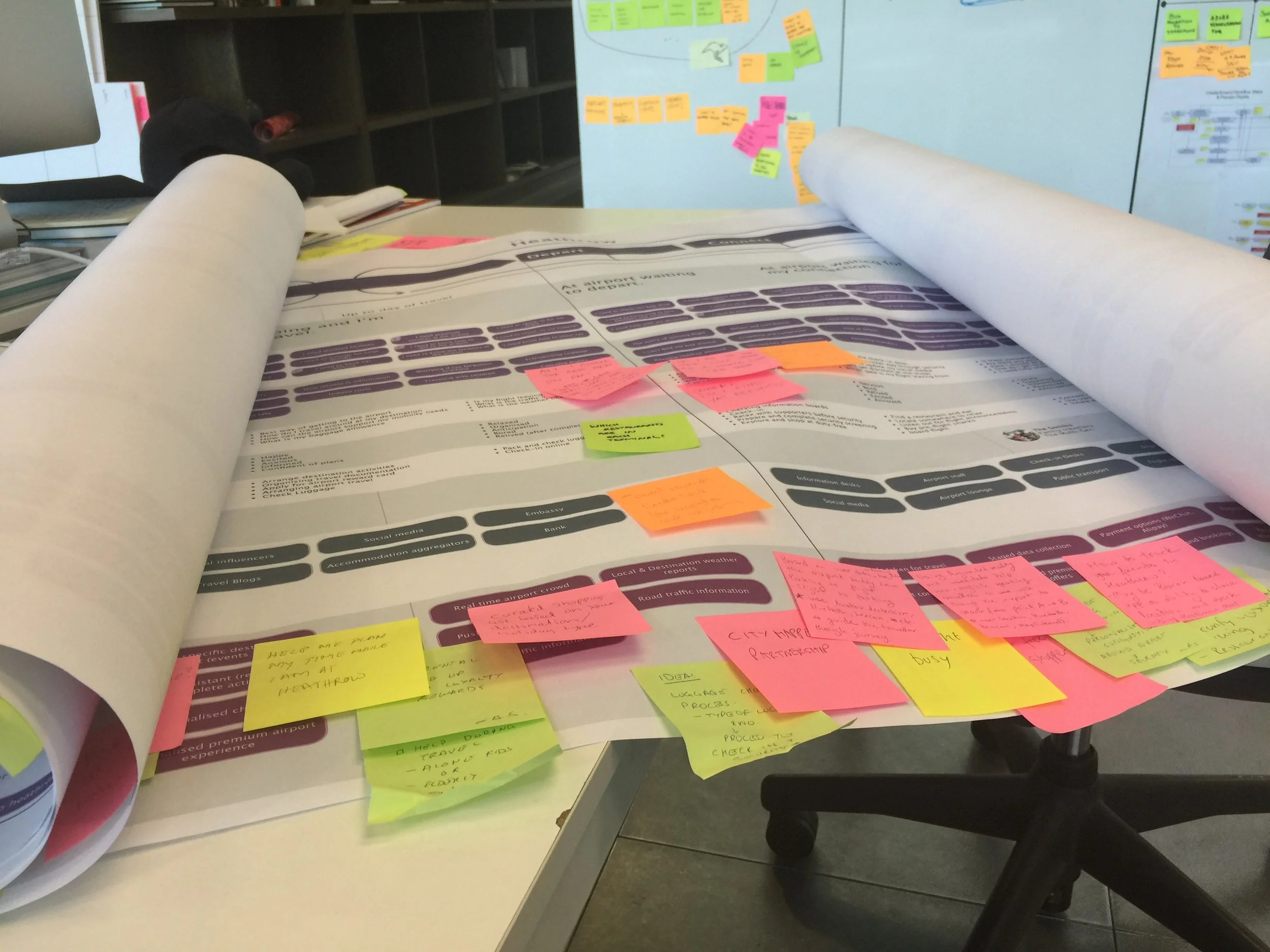
The experience map allowed us to take a customer perspective into the end-to-end journey and helped identify strategic opportunities, pain-points and generate innovative ideas.
The experience map also became a great tool to see how the user profiles created earlier would fit into the journey.
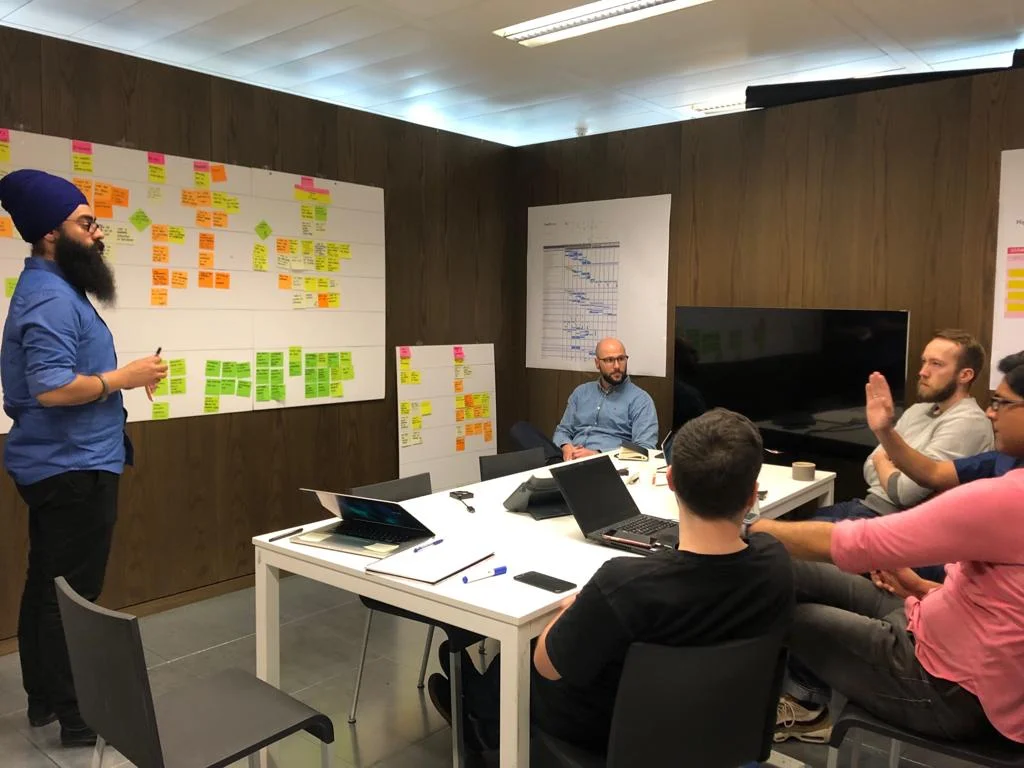
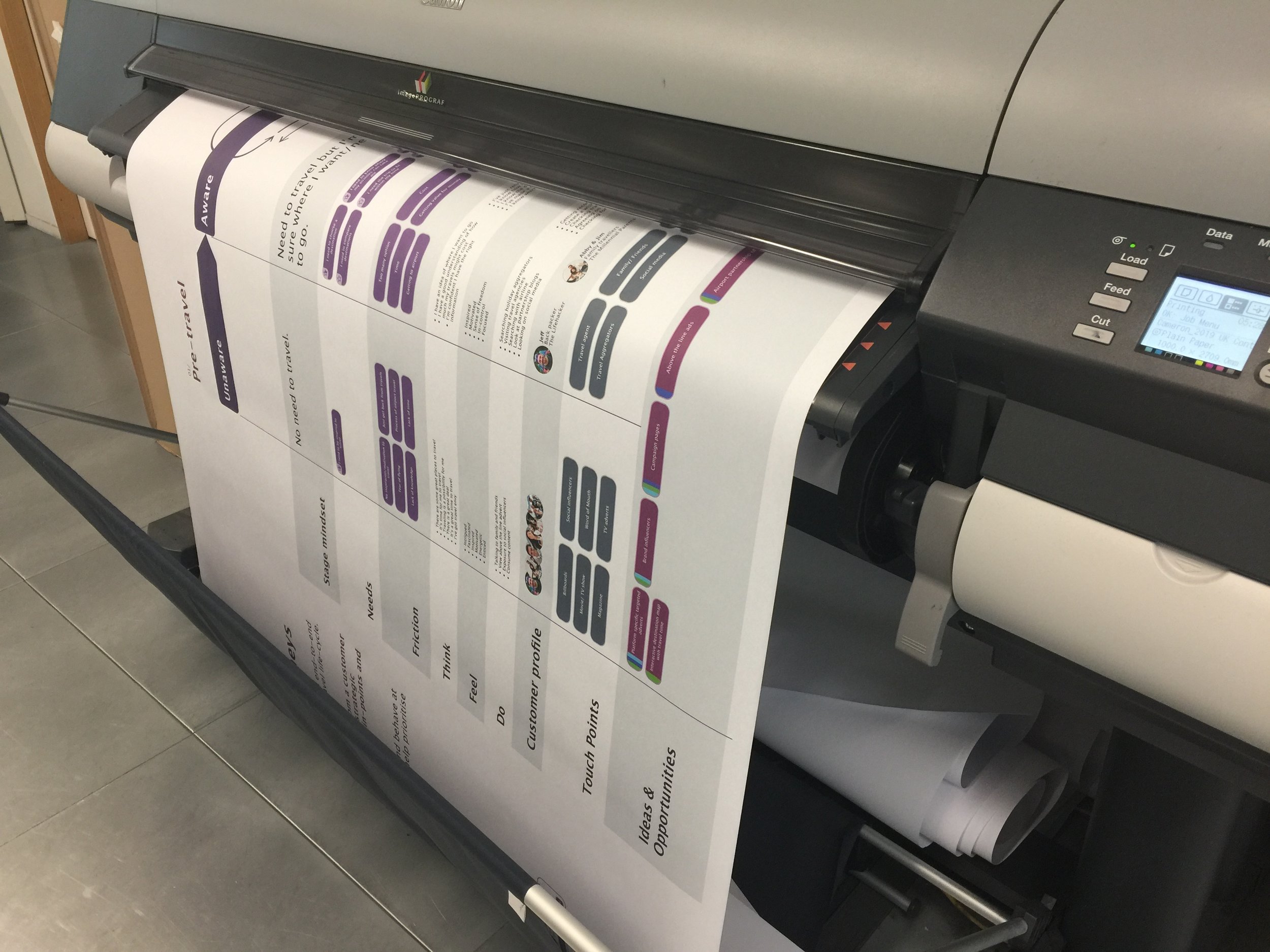
Working closely alongside Heathrow, our own business consultants, running internal and external workshops we built the confidence that outlining the future vision
Data driven Design
Parking
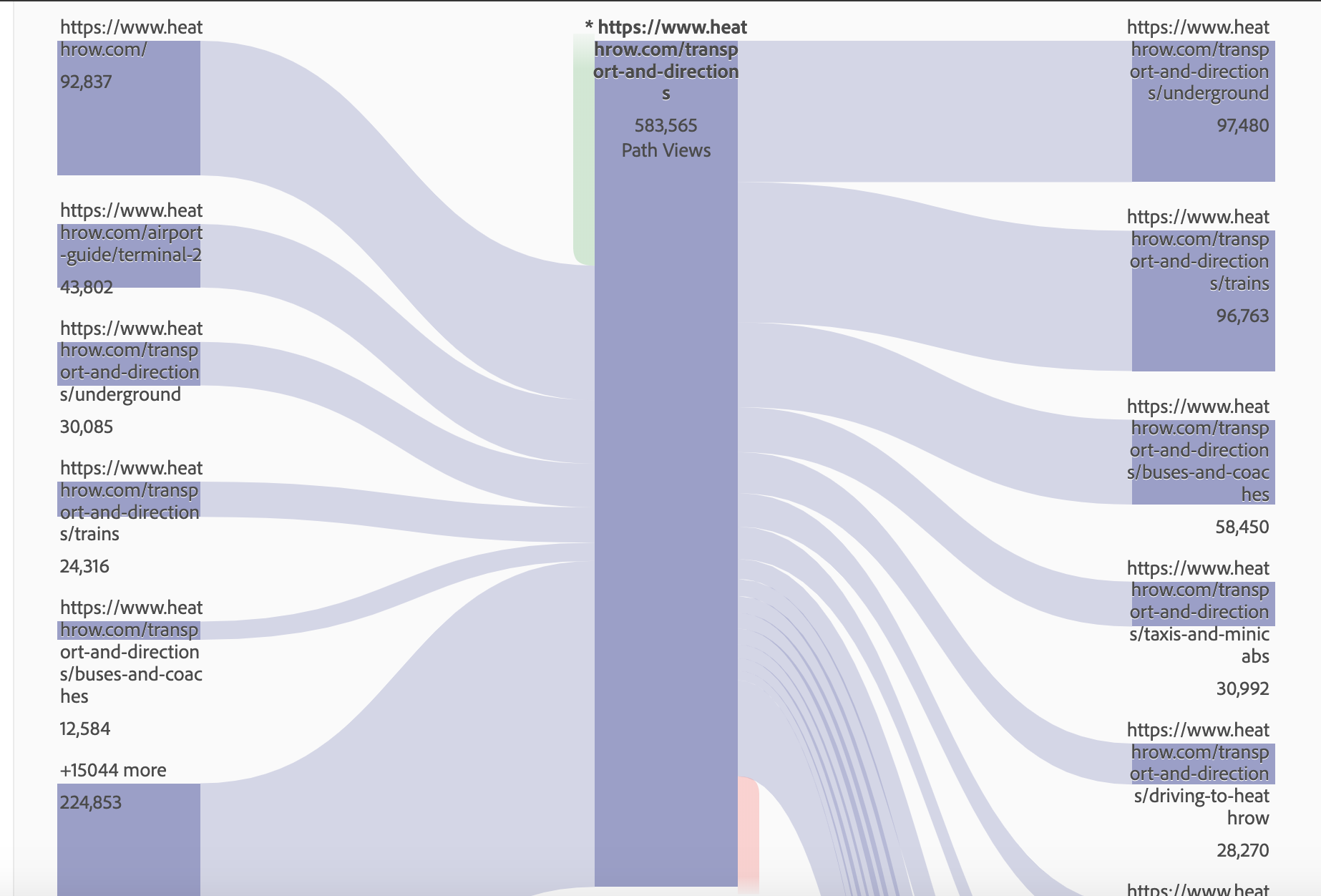
A significant portion of Heathrow’s revenue is generated from their parking services, and it’s therefore crucial from a business perspective to understand the current digital space prior to making any changes. Fortunately I had access to a heap load of data which could allow me to build a case.
What the data looks like
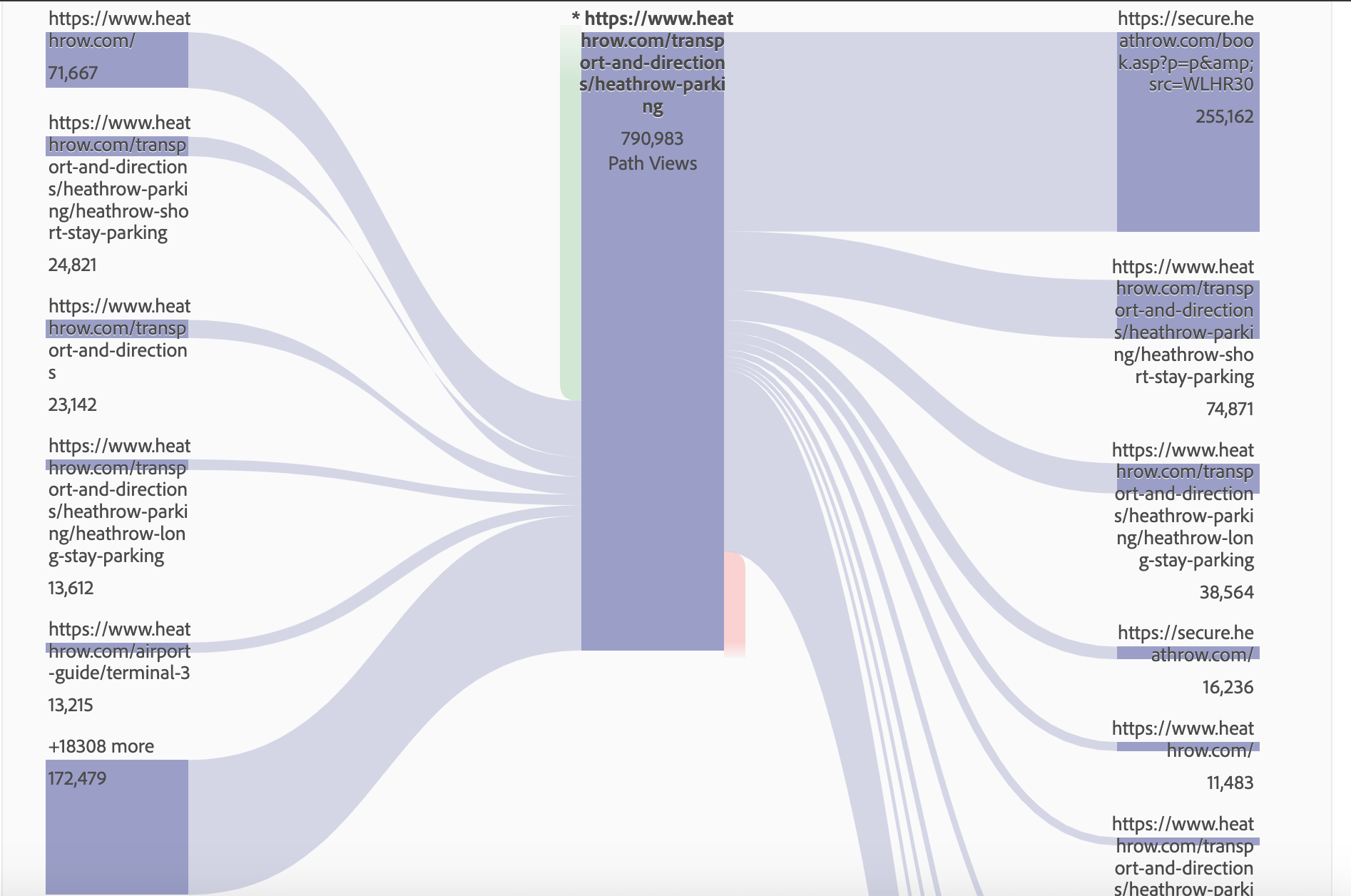
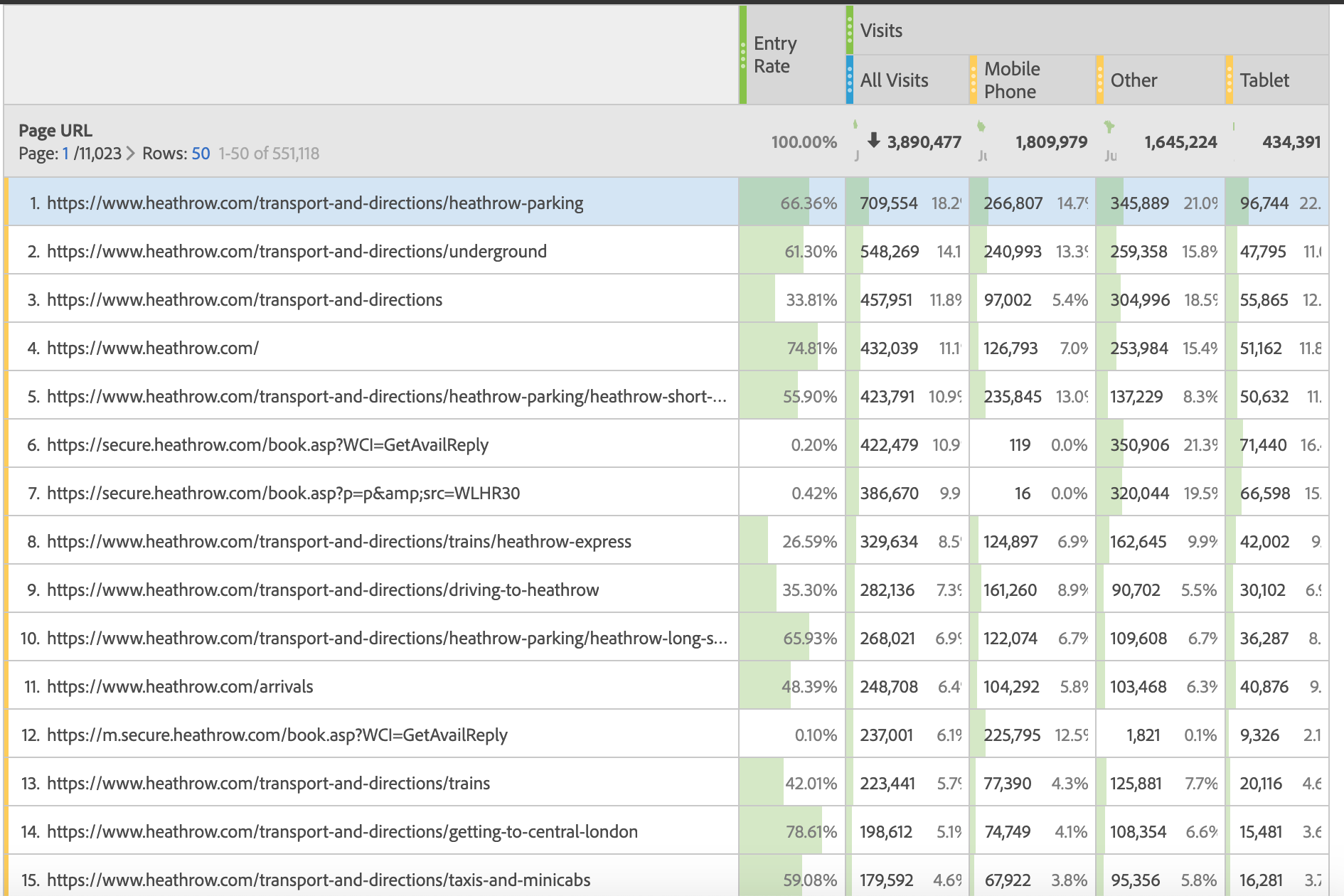
Key Take aways
Tool
Booking tools had a very low conversion rate despite high levels of prominence on pages
journeys
80% of users interested in Heathrow’s parking services were being directed from external searches
What does this mean?
Parking Services needed to be treated as its own entity and key information provided at a glance, to help users make educated and decisive decisions.
Consolidating information
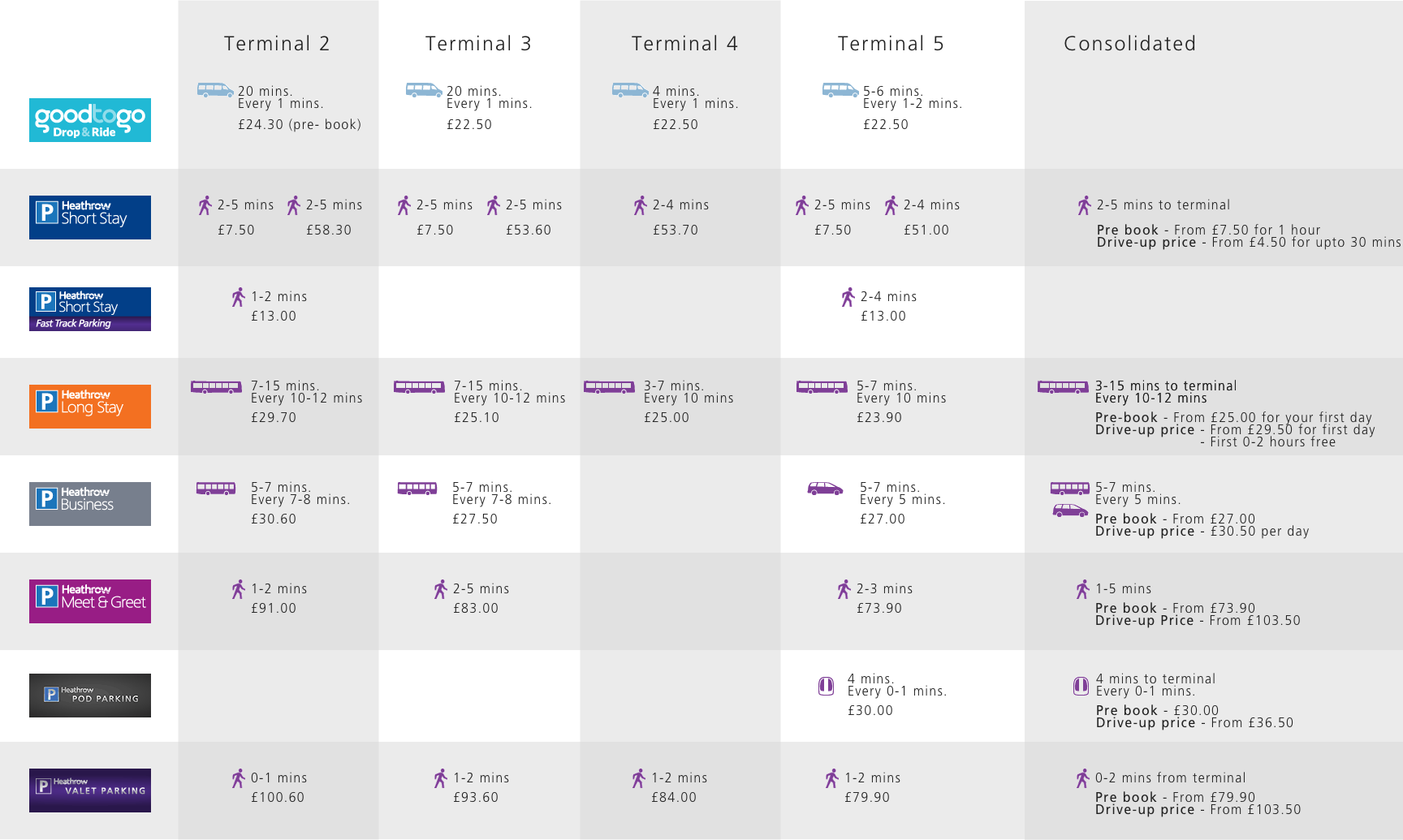
In a bid to provide insightful information, I created a data matrix showcasing the entire breath of parking services long with key USP’s for each service.
This would later help in creating informative patterns for information retention and comparability.
Service data Matrix
USP example

Putting it into practice
Wireframes
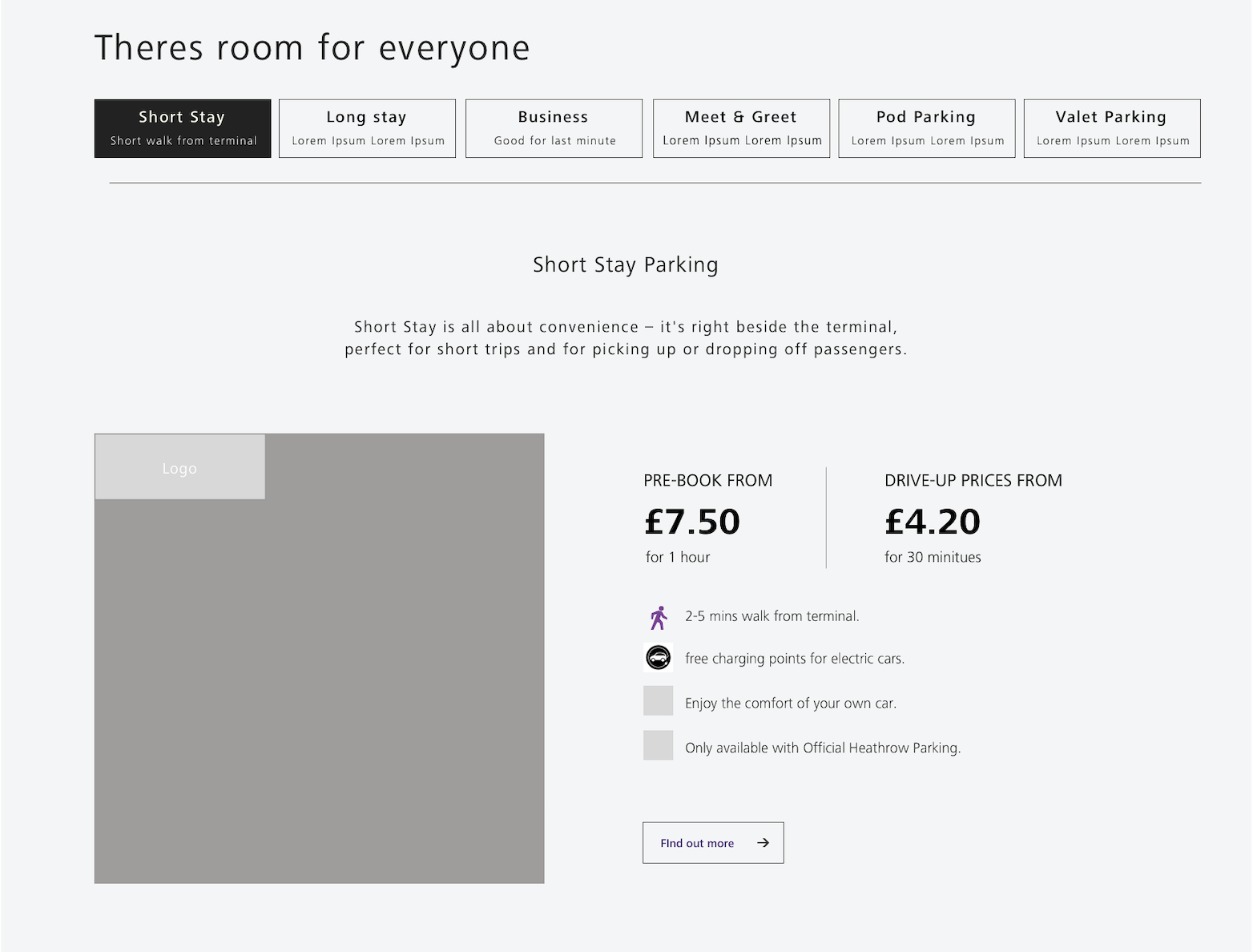

The result
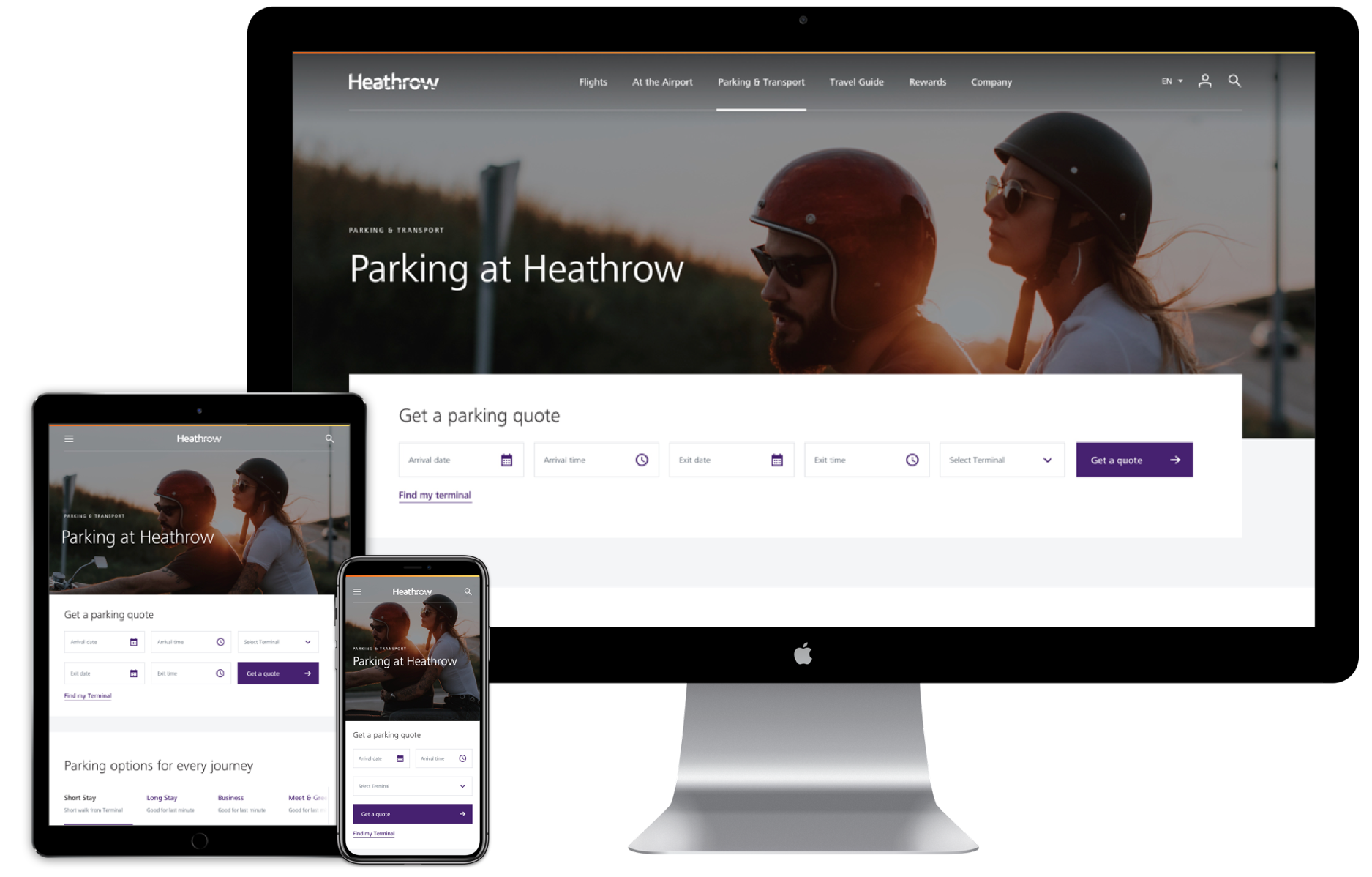
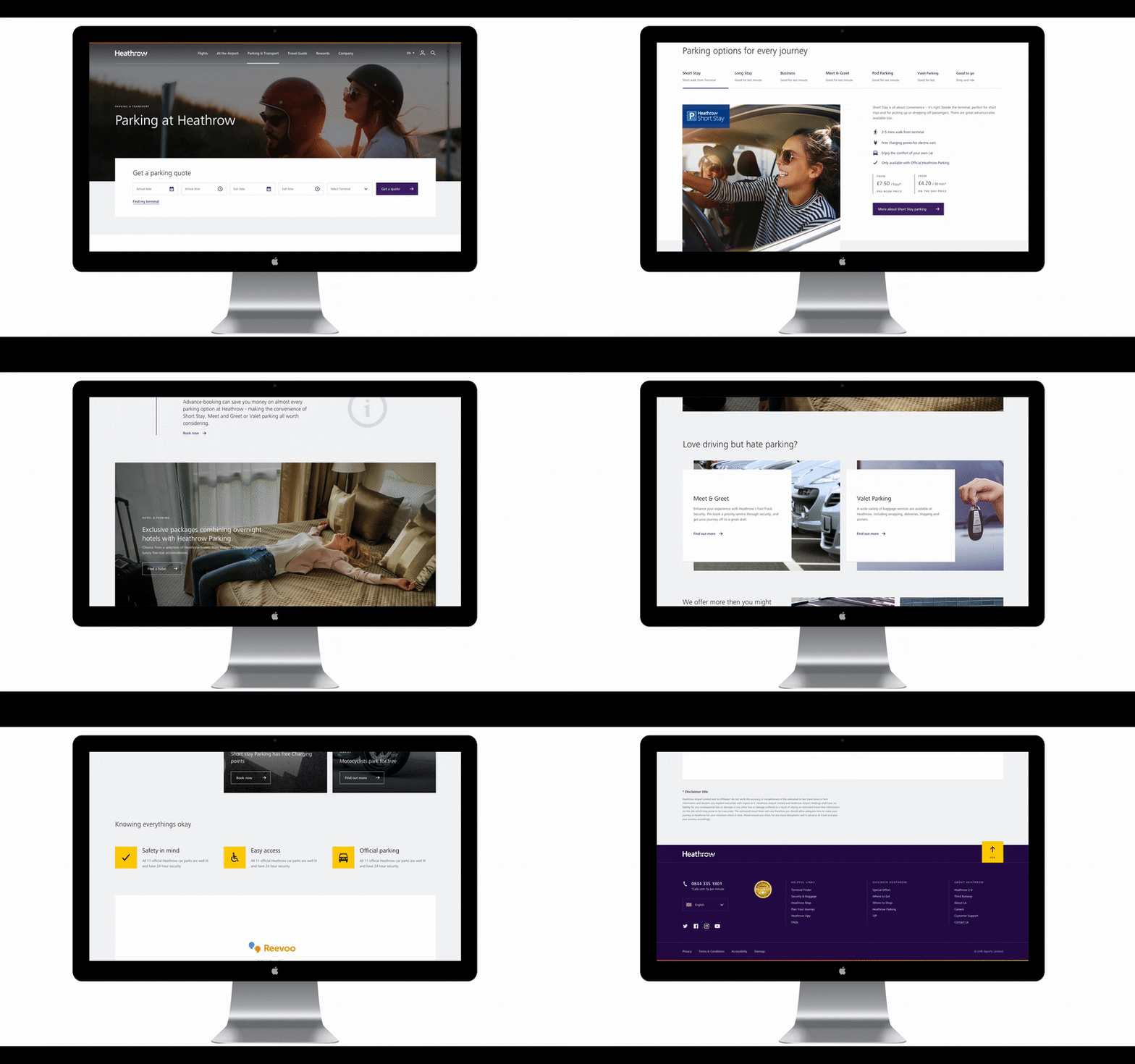
Page flow
Allowing for discovery and helping users build confidence in the services within one contained page
Looking for Answers
The route of Searching
The aim of the web search redesign was to follow the experience principles set out during the discovery phase of informing users.
Working alongside Content Strategy and a third part search experience provider we were able to determine a tagging hierarchy and strategy to aid in waiting search results.
Designing components
Designing in components allowed for flexibility while building a design system, this not only encouraged re-use but also allowed all search types to work across one template.
Components were mapped to tags which entail allowed the search provider to display only the required components needed in the hierarchical order set.
Mapping Components
Block wireframes
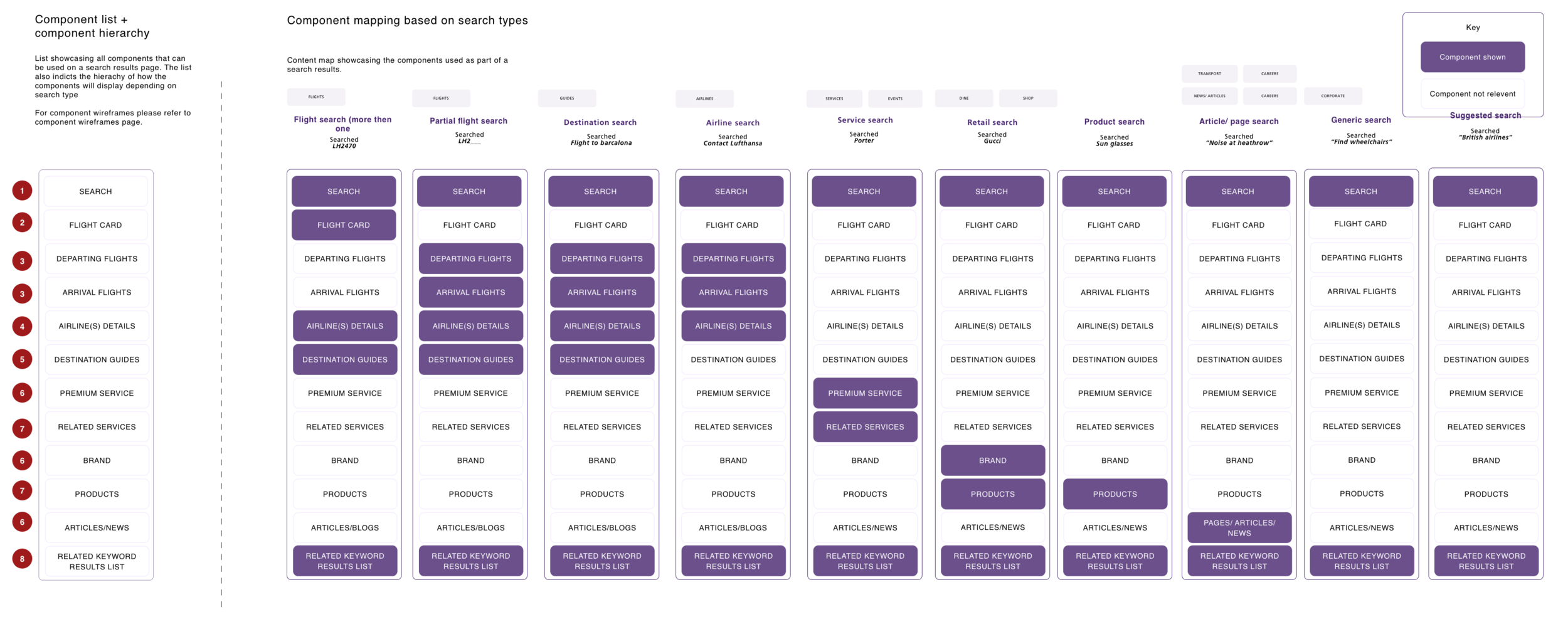
Component Wireframes
Wireframes of components based on content types.
information and a glance
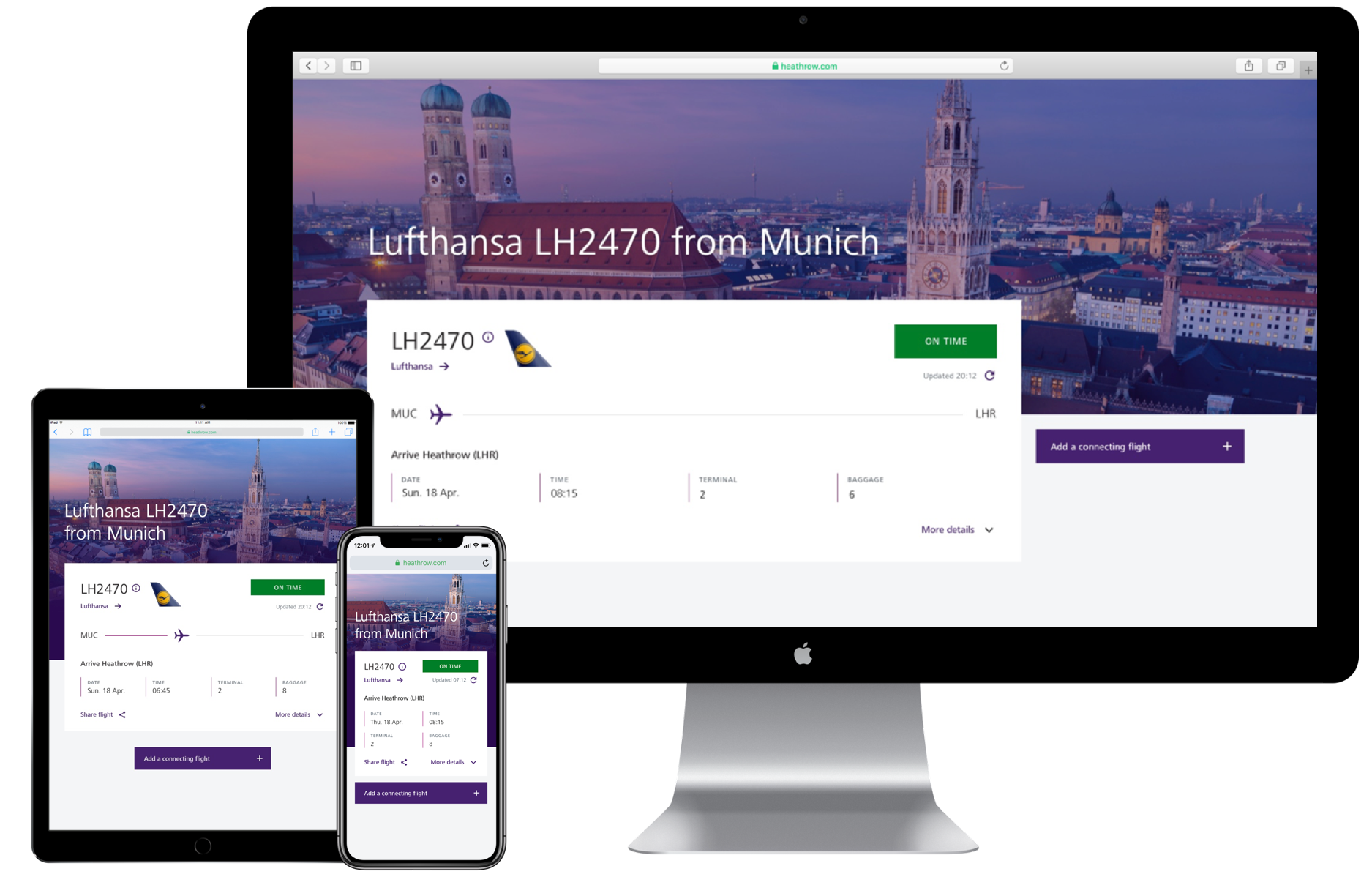
Flight Card
When it comes to airports and data, flight details is part of the core information passengers require. The key is knowing which information to provide at any given moment.
Outgoing Flight card
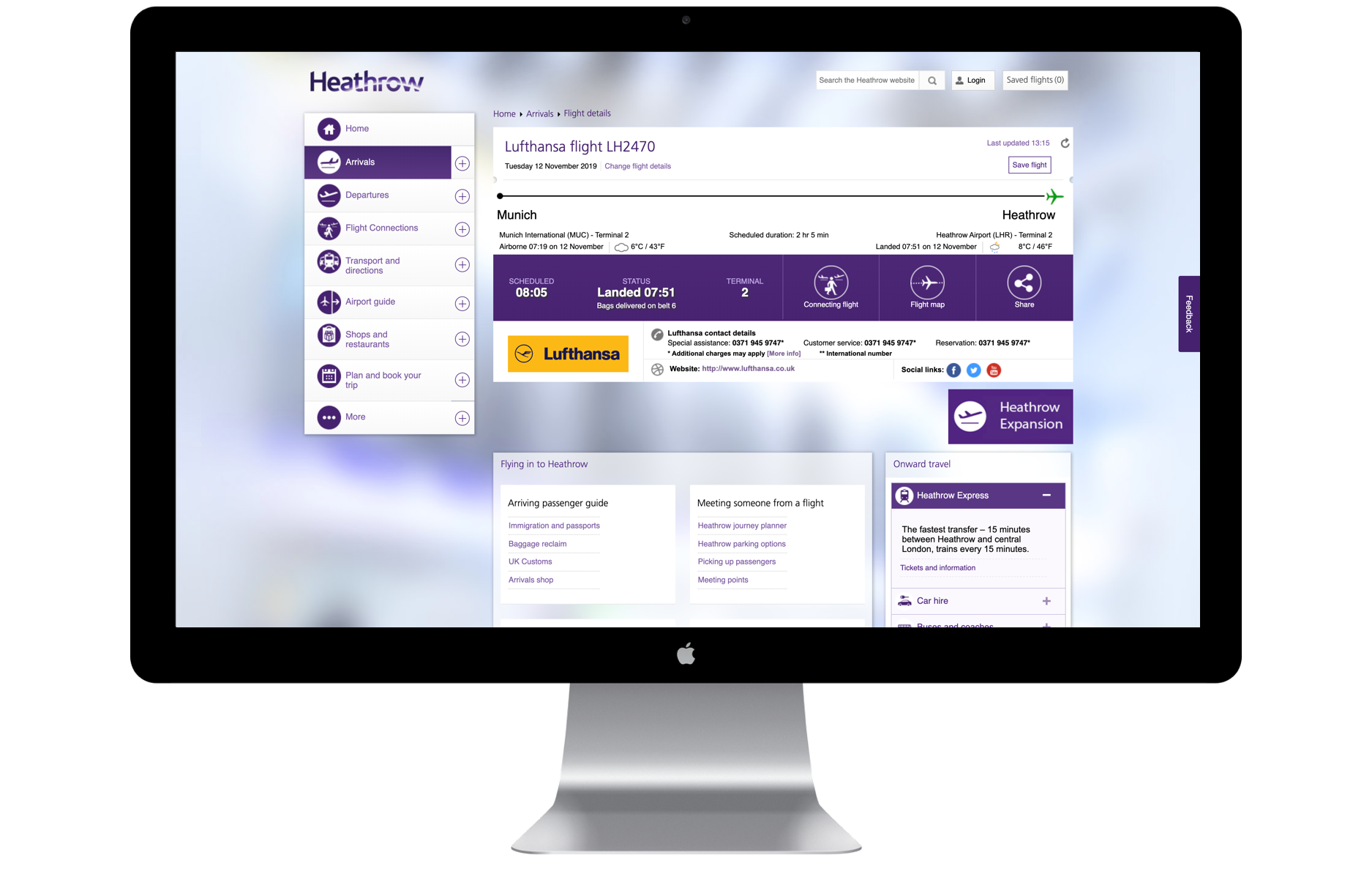
The redesign
The Thinking
Competitive landscape
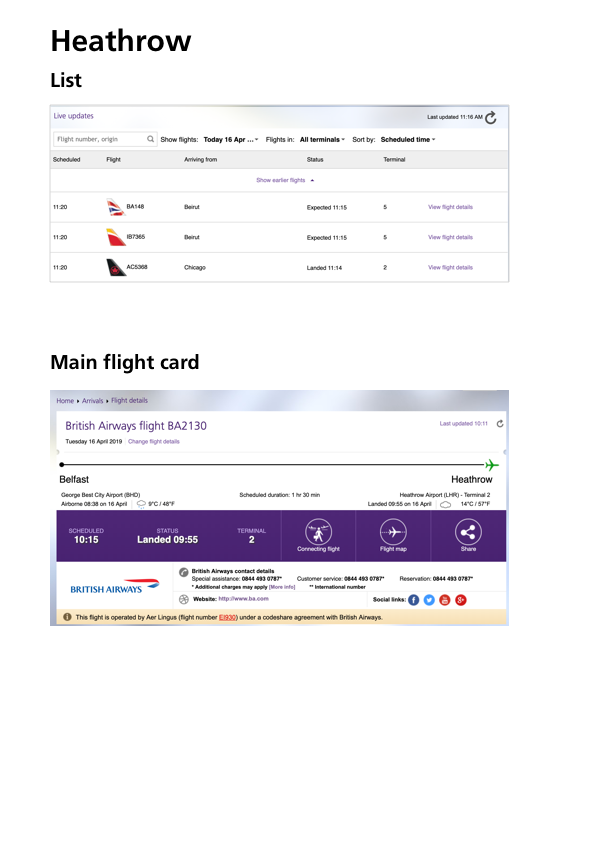
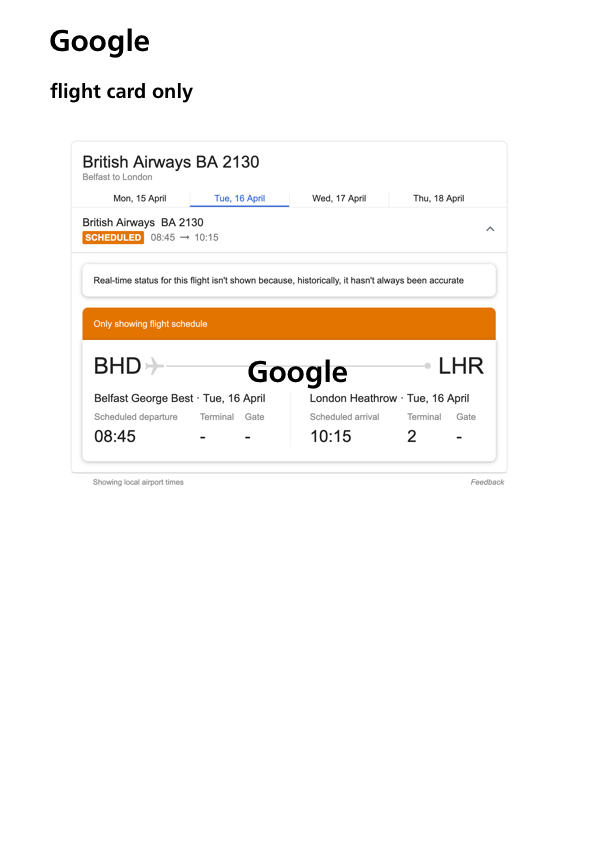
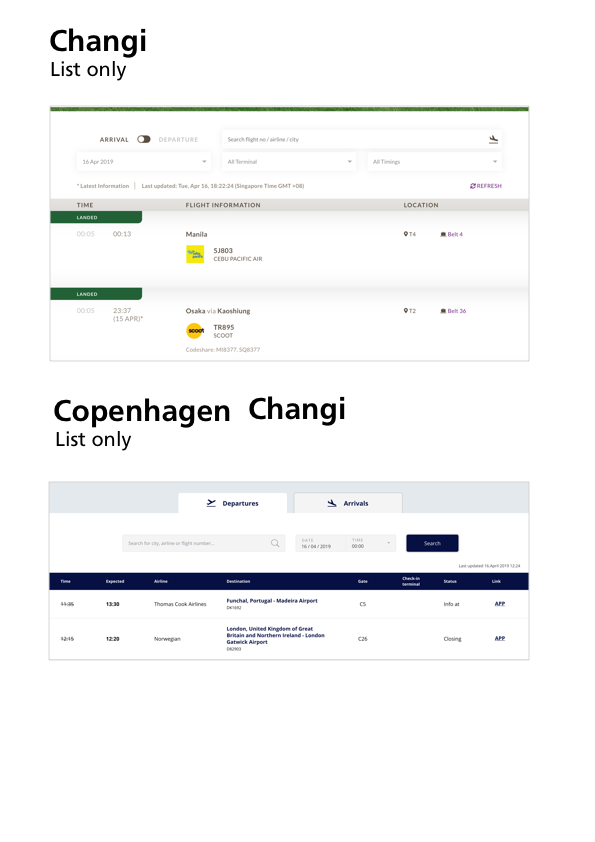
Scoping allowed me to understand the baseline information that was being given to passengers. Heathrow has access to a-lot of data but alongside good practise it was key to know what users want and need.
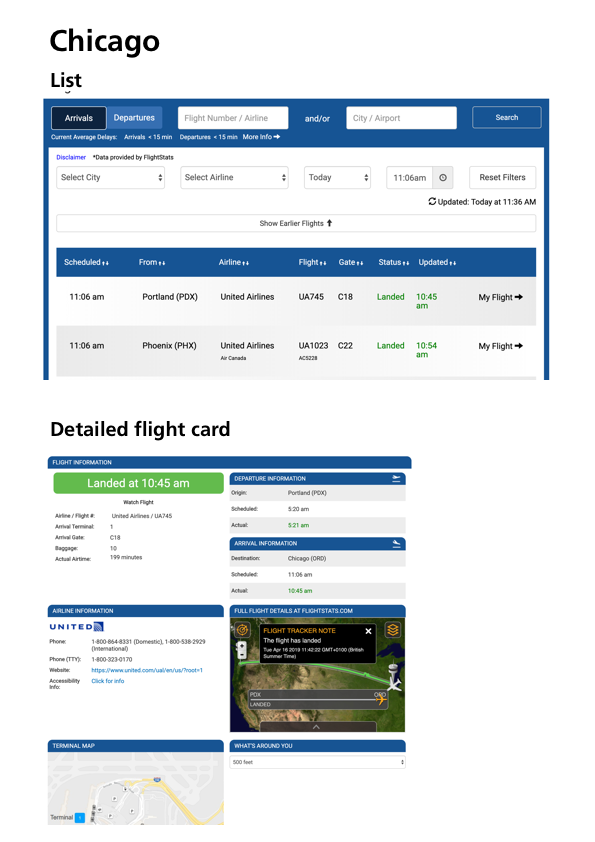
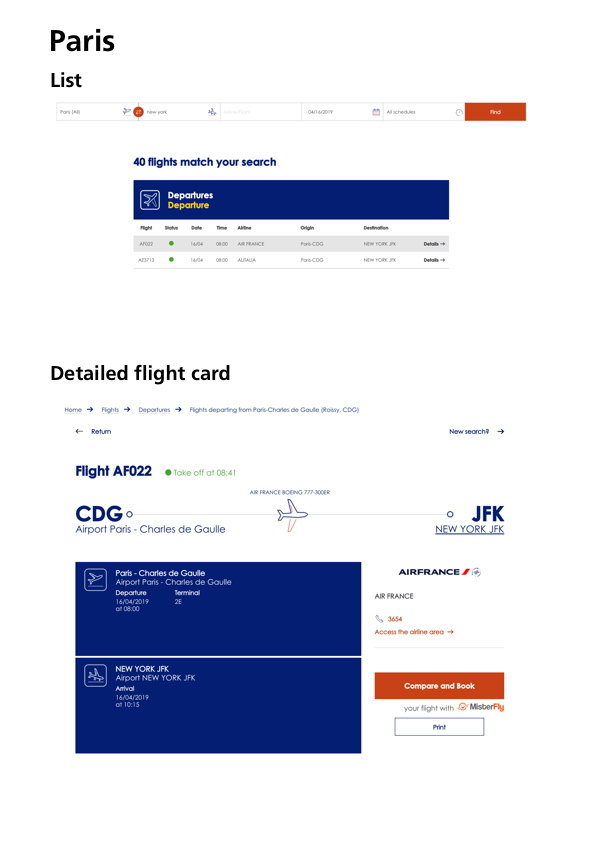
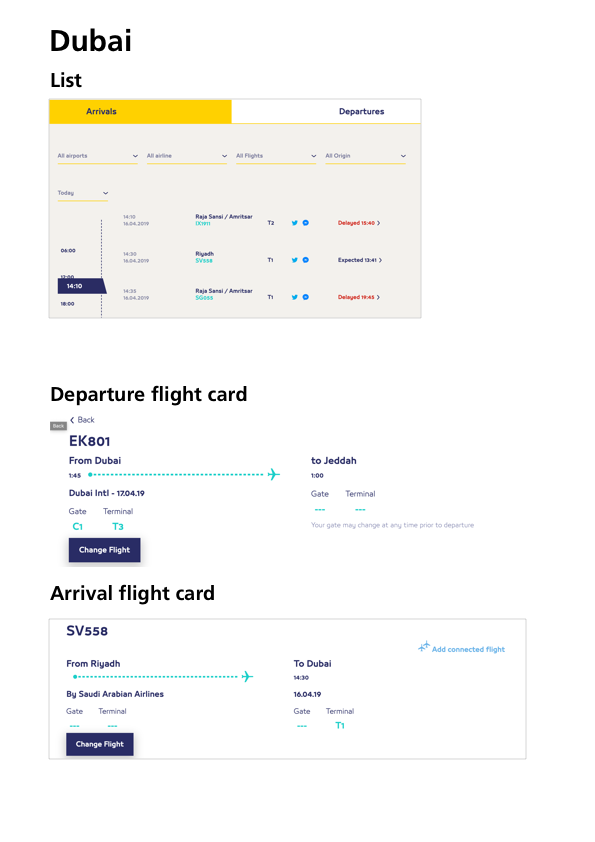
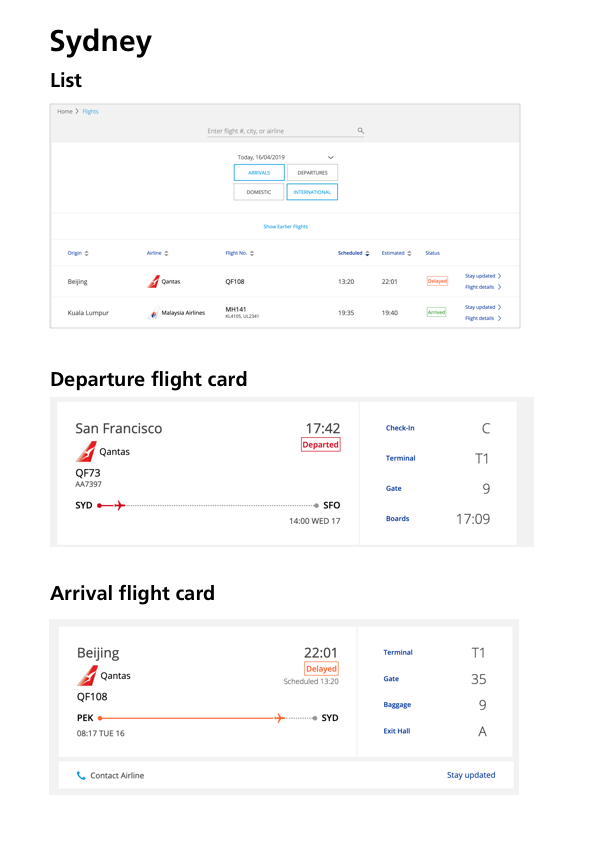
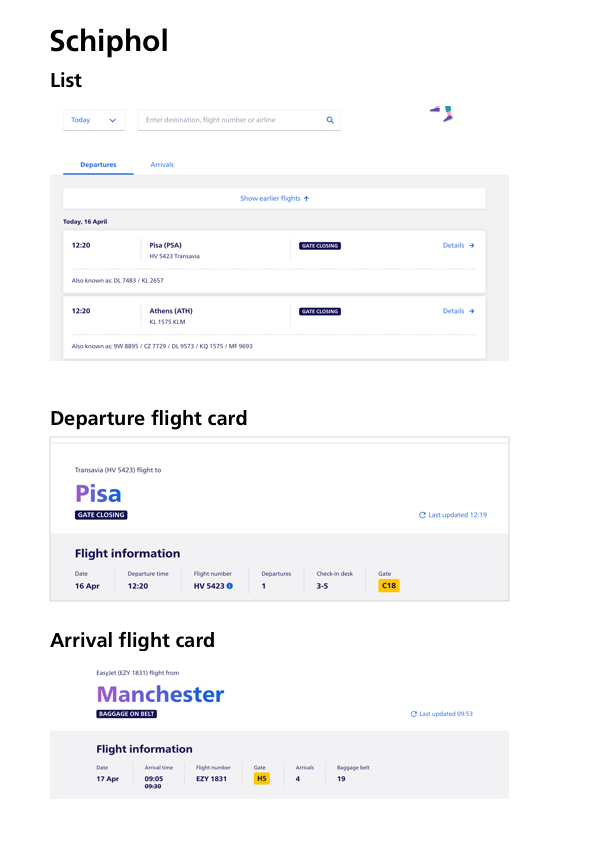
Flight Card analysis
Analysis of the data used by competitors compared to Heathrow, broken down the condescend and bite size, “Mini Flight card” and the more detailed version.
Data Mapping
Allowing us to understand the extent of the flight card variations and the data that would need to be showcased within each version.
Wireframes
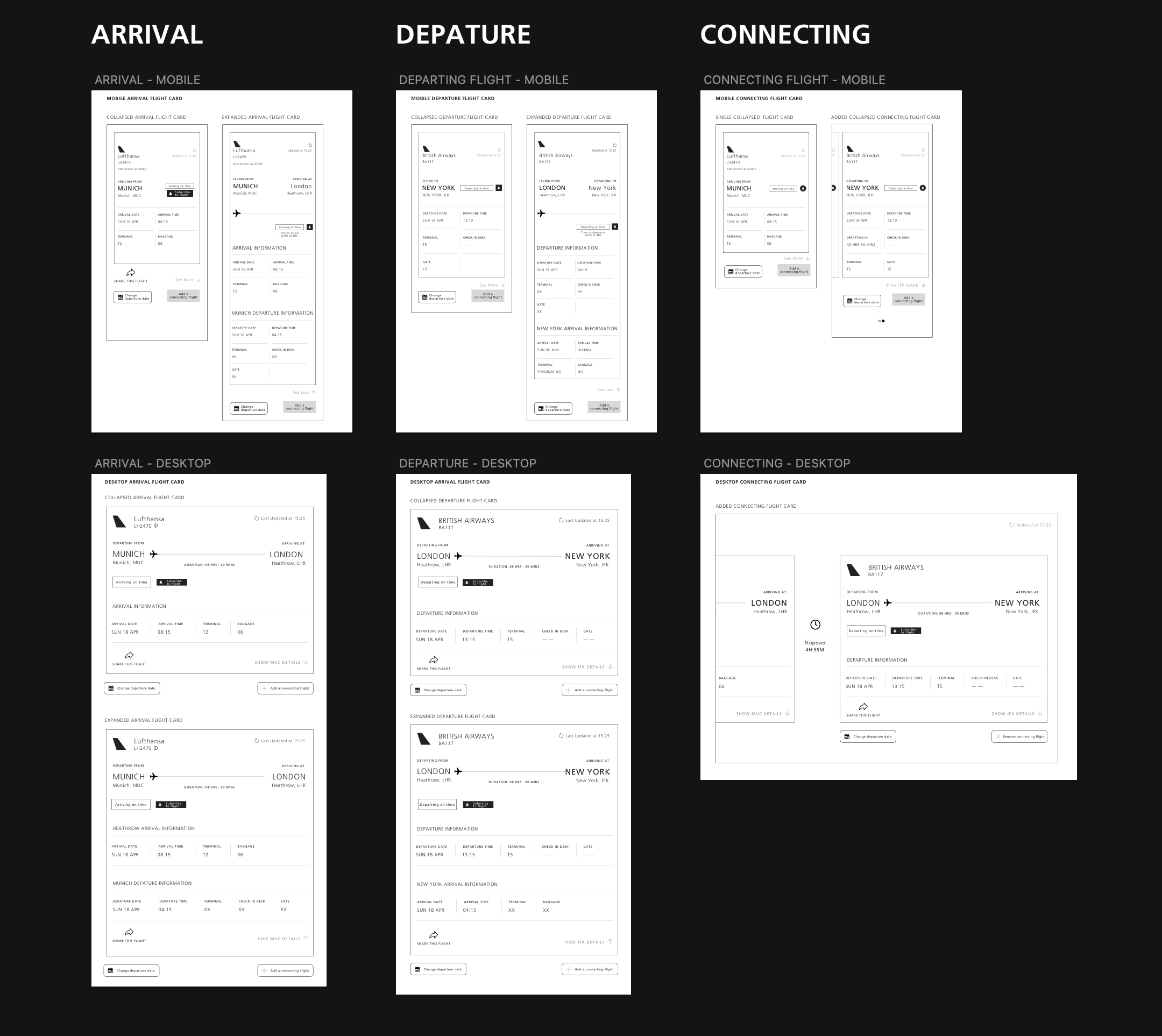
Designing by Template
Simplifying Services
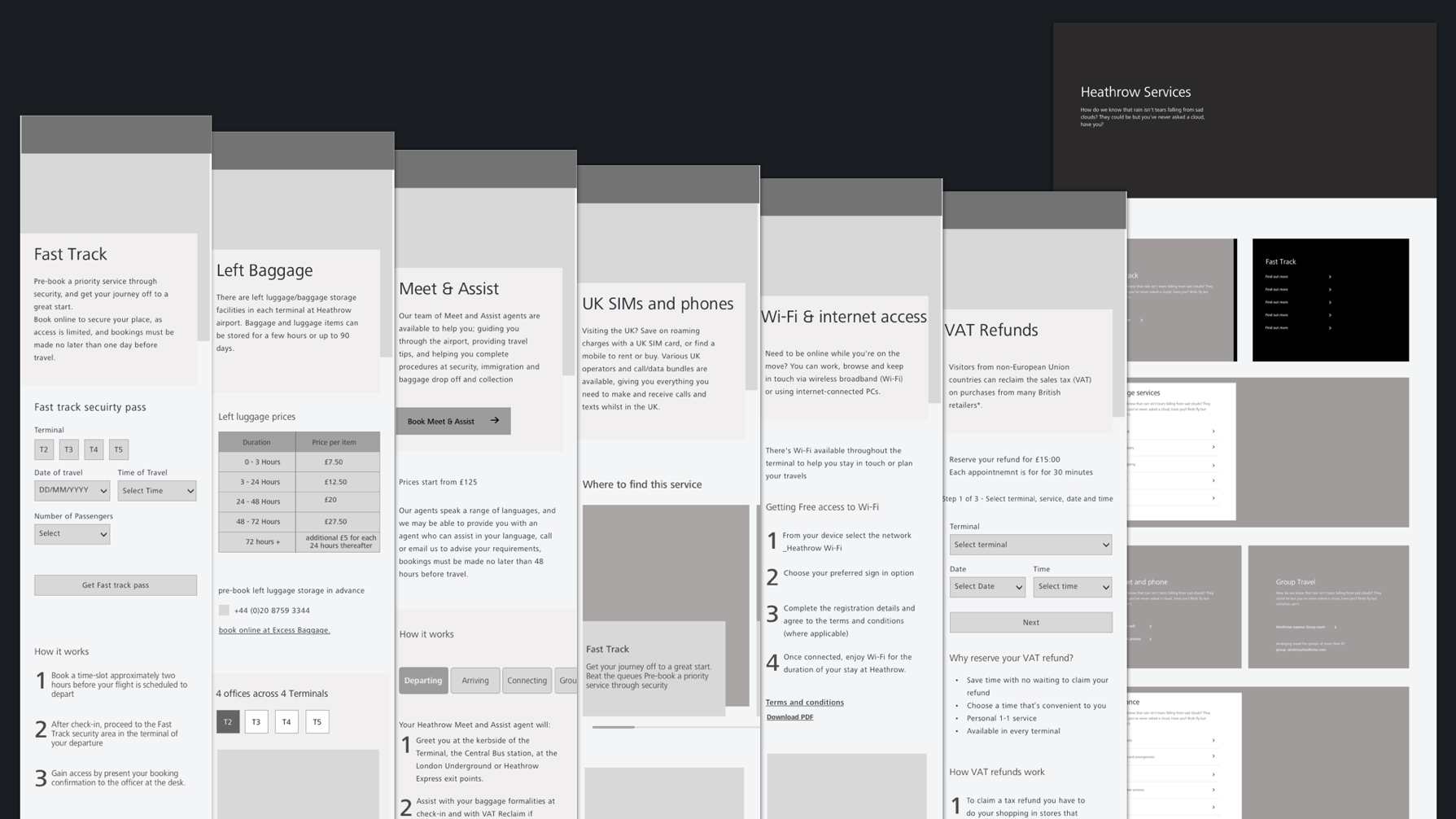
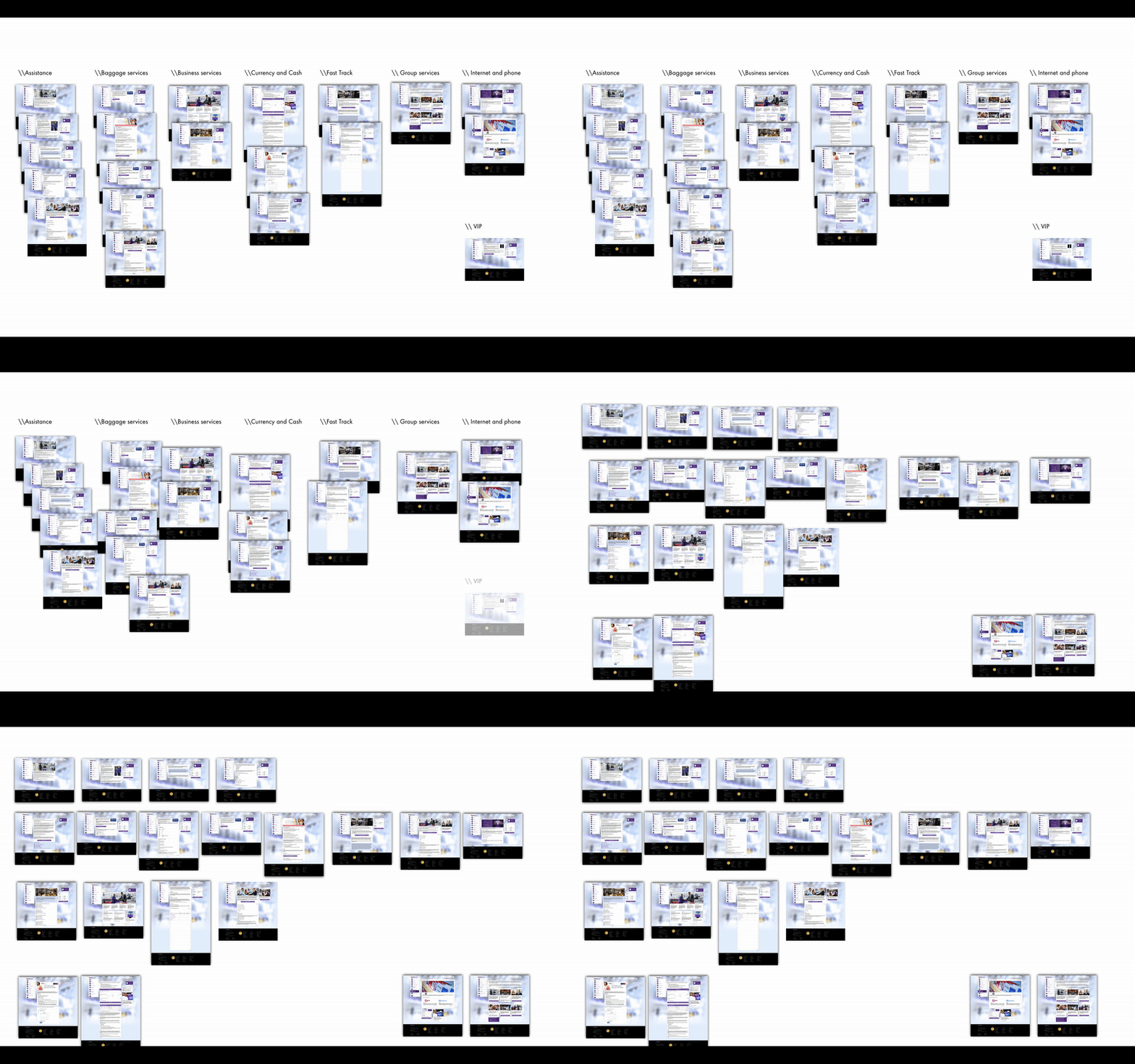
Locating and understanding services at Heathrow didn’t have a unified experience and consisted on several templates that aimed to tell a similar story
Auditing & Defining Patterns
To bring consistency to the narrative of services it was important first audit and understand the variations across service and their detail pages. This ensured we could cater for all needs, and have tangible information to stress test against.
Page narrative
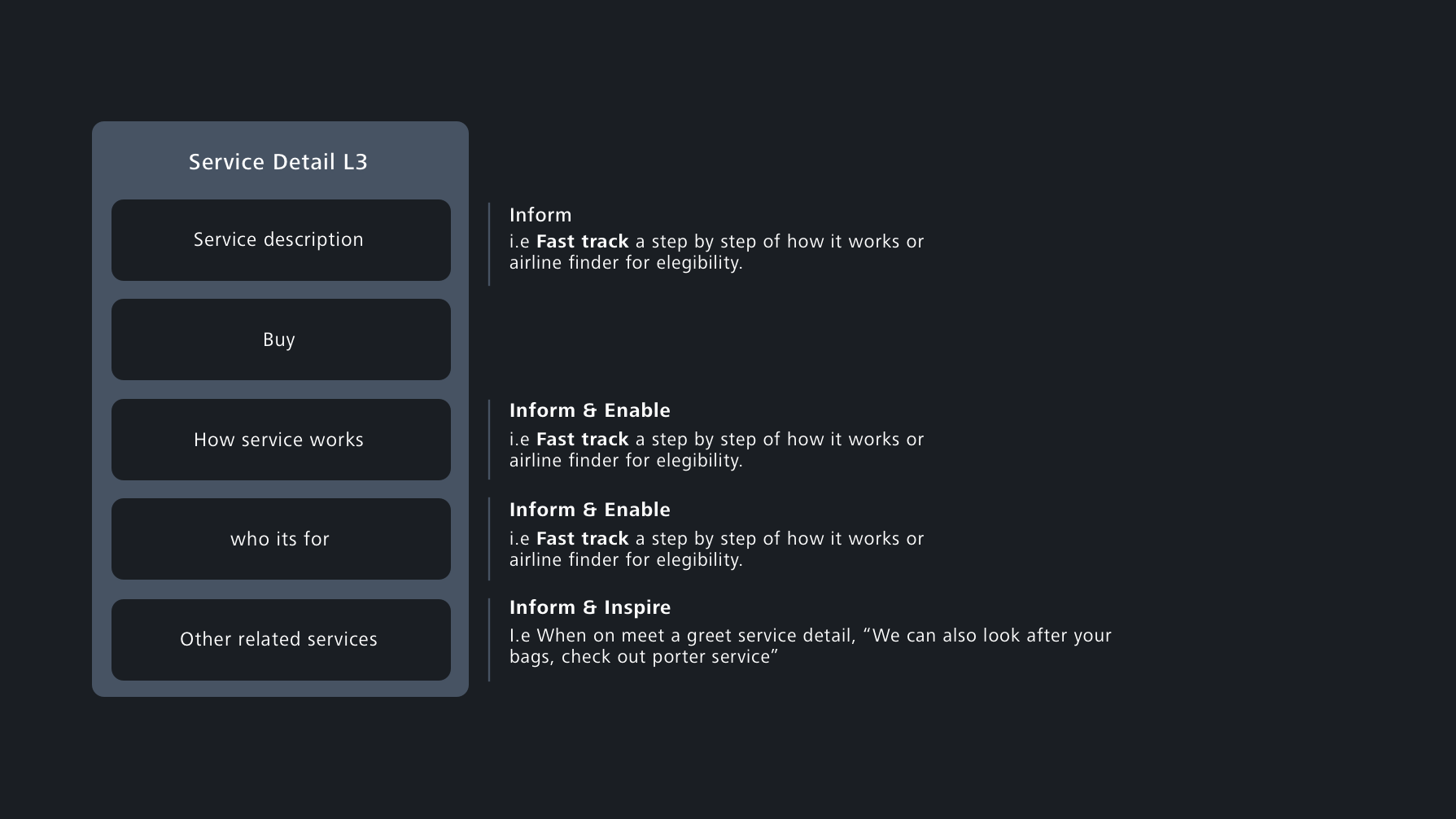
Wireframes